

Bakkt Theater Injury Lawyer: Who Pays if You’re Hurt at PH Live at Planet Hollywood
Key Takeaways
- The big theater inside Planet Hollywood is now called PH Live. It carried the Bakkt Theater name starting in 2023, and Zappos Theater before that, but the marquee changing does not change who owes you a duty of care.
- When another guest is the one who hurt you, Nevada’s innkeeper statute (NRS 651.015) sends the foreseeability question to the judge as a matter of law, not to the jury. Whether the property had notice of prior similar incidents often decides the case before it ever reaches trial.
- The theater and the casino floor around it are covered by cameras that record over themselves on a short rolling cycle. That footage is usually the strongest evidence in a venue injury claim, and nobody preserves it unless someone asks.
You had tickets to a show at Planet Hollywood. You crossed the casino floor to the theater, grabbed a drink on the way in, and then something went wrong: a slick patch on the walkway, a shove in a packed standing section, a fall on the steps down to the floor. The show kept going. Your night ended somewhere else.
A 7,000-seat theater inside a Caesars Entertainment resort hosts sold-out crowds week after week. It also carries insurance built to pay out as little as possible when a guest gets hurt. Those adjusters go to work before you’ve filled a prescription. Planet Hollywood injury claims move fast in the wrong direction if nobody pushes back.
Planet Hollywood sits at 3667 South Las Vegas Boulevard, at Harmon Avenue, wrapped by the Miracle Mile Shops. Injuries there follow the same patterns as every other Las Vegas Strip property: a lot of people, a lot of alcohol, hard floors, and a layout most guests are walking for the first time.
Who Is Liable if You’re Injured at PH Live at Planet Hollywood?
The property owner and operator (Planet Hollywood and Caesars Entertainment) can be liable when a guest is hurt by an unsafe condition it knew about or should have caught, such as a wet walkway, a broken seat, a dark stairway, or a crowd nobody was managing. A concert promoter, a contracted security company, or another guest may share the blame depending on what actually caused the injury. Nevada premises liability law puts the duty to keep guests reasonably safe on the business that invited them in.
Is the Bakkt Theater Still Called the Bakkt Theater?
No. If you’re searching for the Bakkt Theater, you’re looking for the venue Caesars now calls PH Live. Naming rights at this theater keep turning over. It opened in 1976 as the Aladdin Theatre for the Performing Arts, and since then it has run as PH Live, The AXIS, and Zappos Theater before Caesars announced the Bakkt Theater name in 2023. Caesars has since put PH Live back on the marquee.
Planet Hollywood also has more than one theater. PH Live is the 7,000-seat room booked in partnership with Live Nation, and the Criss Angel Theater is a separate, much smaller venue at the same resort. Which room you were in matters, because it changes which promoter, which crew, and which security detail was working that night.
Where Guests Actually Get Hurt at This Theater
PH Live is not a conventional sit-down theater. Caesars runs it with VIP table seating and a floor that gets reconfigured show to show, sometimes reserved seats, sometimes open standing room, so a big share of the audience is often up, moving, and holding a drink for two hours. That layout is what shapes the injury patterns, and it puts this room at the rougher end of concert and sporting event injuries in Las Vegas.
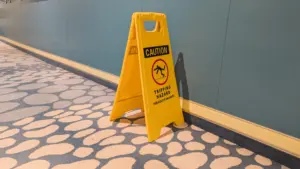
- Slips and falls on the approach: PH Live sits off the south side of the casino floor, and most guests get there either across the gaming floor or through the Miracle Mile Shops, which horseshoe around it, past the bars right outside the doors. Spilled drinks on polished floor, a freshly mopped stretch with no sign, worn carpet edges, and floor transitions between the casino and the theater lobby all put people down. A slip-and-fall on that kind of surface breaks wrists and hips.
- Crowd pressure on the floor: When the floor is sold as standing room, it surges toward the stage and jams up at the exits when the show ends. Crush injuries, trampling, and falls happen when nobody is controlling flow.
- Steps, risers, and dark aisles: House lights go down and guests keep walking. Unmarked step-downs, a riser edge, a loose handrail, or a burned-out aisle light in a dim room is all it takes.
- Seating, table, and equipment failures: A chair that collapses or a table that gives way sends people to the ground on top of glassware. Closer to the stage, rigging, lighting trusses, pyrotechnics, and cabling carry their own risk.
- Fights and assaults: Alcohol plus a packed standing crowd starts fights. What security did or failed to do in the minutes before is the whole question.
Who Can Be Held Responsible for a PH Live Injury?
You bought a ticket expecting a safe night out, and that expectation has legal weight behind it. A business that opens its doors to paying guests owes them a duty of care: keep the property reasonably safe, and fix or warn about hazards it knows about or should have known about. When it fails and you get hurt, that failure is the core of a Nevada premises liability claim.
At a live event, that duty gets specific. Staff enough trained people to run the show. Watch for overcrowding and surges. Respond to fights instead of letting them play out. Keep aisles and exits clear and lit.
Responsibility here rarely lands on one party. Planet Hollywood and Caesars Entertainment own and operate the property. Because the room is booked in partnership with a national promoter, that promoter and the touring production may have controlled staging, barricades, and the floor plan. A separate contractor may have staffed the doors and the pit. Sorting out who controlled what is not a technicality: every party at fault carries its own insurance policy, and those policies are what pay you.
What if Another Guest or Weak Security Caused It?
When the person who hurt you was another concertgoer rather than an employee, Nevada applies a specific statute, and it is stricter than most people expect. Under NRS 651.015, an owner or keeper of a hotel is not civilly liable for injury caused by someone who is not an employee under its control unless two things are both true: the wrongful act was foreseeable, and the owner failed to take reasonable precautions against it.
Two details in that statute do most of the work. First, it says the court decides as a matter of law whether the act was foreseeable and whether the property had a duty to guard against it. A judge, not a jury. Second, it narrows what “foreseeable” even means: an act is not foreseeable unless the owner failed to exercise due care for guest safety, or prior incidents of similar wrongful acts happened on the premises and the owner had notice or knowledge of them. That second path is why a venue’s incident history becomes the center of these cases, and why getting to that record early matters.
One thing that is not a path: over-serving. Nevada immunizes a licensed vendor from civil liability for serving alcohol to a person 21 or older (NRS 41.1305). No matter how much the guest who hurt you had been drinking at the bars outside the theater, that is not a claim against the venue. The case runs on the security response, not on the pours. If hotel or casino security injured you directly while restraining or removing someone, that is a separate and very different claim.
Injuries at Planet Hollywood That Aren’t Slip-and-Falls
A theater ticket is not the only way to get hurt at this property, and the claim looks different depending on where it happened.
If another guest hit you, shoved you down the stairs, or dragged you into a fight, you may have two claims at once: a direct assault and battery claim against the person who did it, and a negligent security claim against the property under the innkeeper statute. Police reports and medical records from that night carry real weight here, because they establish what happened before anyone starts arguing about who saw what.
The other one people forget is the drive in and out. Planet Hollywood’s covered garage and valet, both entered off Harmon Avenue, empty all at once when a show lets out. Backing collisions, pedestrians struck between rows, blind corners, and valet drivers moving guest vehicles all cause injuries that get handled as parking lot and garage collisions rather than premises claims. If a valet was behind the wheel, the property’s exposure changes again.
What Should You Do After an Injury at the Theater?
A concert is loud, dark, and crowded, and the first hour after an injury decides how much of your claim survives. A few things protect it.
- Get security or a manager, and get medical attention: Ask for help on the spot. An exam creates a record that the injury happened and how bad it was, which matters because adrenaline hides a lot at a show.
- Make them write an incident report, and get the number: A verbal complaint to a staffer disappears. A report number is something you can point to later.
- Photograph the hazard before it’s gone: The wet floor gets mopped, the broken chair gets pulled, the blocked exit gets cleared. Shoot it now, wide and close, and get the surrounding area so the location is identifiable.
- Collect witnesses: Names and phone numbers from anyone nearby. Strangers at a concert are unreachable an hour later.
- Note exactly where you were: Section, row, entrance, or the nearest landmark. Camera coverage gets pulled by location, and “somewhere near the bar” is not enough to find the right file.
- Keep everything: Your ticket, wristband, receipts, medical bills, and any record of missed work.
The footage is the piece that decays. Between the casino floor cameras and the theater’s own coverage there is usually video of what happened, but surveillance systems overwrite on a rolling schedule measured in days or weeks, not years. Once it’s gone, you’re left arguing about a hazard nobody can see anymore.
What Can You Recover, and How Long Do You Have?
Venue injuries run from a sprained ankle to something permanent. Crowd surges produce crush injuries and fractures. A fall on a hard floor or a blow to the head can cause a traumatic brain injury with symptoms that outlast the treatment by years. When someone else’s negligence caused it, a claim can cover medical bills, lost wages, and pain and suffering.
You generally have two years from the date of injury to file suit, under NRS 11.190(4)(e). Under Nevada’s modified comparative negligence rule (NRS 41.141), sharing some of the blame does not end your claim: recovery is barred only when your fault is greater than the defendant’s. At exactly 50% you still recover; at 51% you don’t. Whatever percentage lands on you reduces the award by that share, which is exactly why the venue’s insurer will work hard to pin as much of it on you as it can.
Don’t Let a Caesars Property Set the Terms
A resort this size does not volunteer fair compensation. Its carrier starts building a file immediately, often while you’re still on the property, and the early offer assumes you won’t push. Meanwhile the footage that would settle the argument is getting overwritten.
The Richard Harris Law Firm has been handling injury claims against Las Vegas hotel-casinos since 1980. Call and we’ll go through what happened and see if we can help. There’s no fee unless we recover for you.
Frequently Asked Questions
Do I Need a Bakkt Theater Injury Lawyer if the Theater Is Now Called PH Live?
It’s the same room. The theater at Planet Hollywood took the Bakkt Theater name in 2023, and Caesars has since put PH Live back on it. It was Zappos Theater before that. The name on your ticket has no effect on your claim. What matters is the date, the location inside the property, and what caused the injury.
Who Is Liable if I’m Injured at PH Live at Planet Hollywood?
Usually the property owner and operator, because Nevada premises liability law requires a business to keep guests reasonably safe from hazards it knew about or should have caught. Depending on what happened, the concert promoter, a contracted security company, an equipment vendor, or another guest can share liability. More than one party can be on the hook at once.
What if Another Concertgoer Injured Me at PH Live?
You may have two claims: one against that person for assault and battery, and one against the property for negligent security. Nevada’s innkeeper statute (NRS 651.015) allows the second only if the act was foreseeable and the owner failed to take reasonable precautions. The statute has the court, not the jury, decide foreseeability, and prior similar incidents the owner knew about are a key way to establish it.
Can I Sue Planet Hollywood for Over-Serving the Guest Who Hurt Me?
No. Nevada law (NRS 41.1305) makes a licensed vendor immune from civil liability for serving alcohol to a person 21 or older, so how much the venue poured is not a claim. The viable theory against the property is negligent security: what its staff did or failed to do about a situation it should have controlled.
How Long Do I Have to File a Claim After a Bakkt Theater Injury?
Generally two years from the date of the injury in Nevada, set by NRS 11.190(4)(e). Waiting that long is still a bad idea. Surveillance footage and staffing records disappear on much shorter cycles, so the practical deadline for preserving the evidence your case runs on arrives long before the filing deadline does.
What Evidence Does a Bakkt Theater Injury Lawyer Need From PH Live?
Security video from the theater and the surrounding casino floor, the venue’s incident report, maintenance and inspection logs for the area, the security staffing plan for that night, and any record of prior similar incidents at the property. Your own medical records, photos, and witness contacts fill in the rest. The video is the piece with a deadline, so a preservation request should go out immediately.