

Laundromat Injury Lawyer: Injured at a Laundromat in Las Vegas
Key Takeaways
- The laundromat and its landlord can both be on the hook when a hazard they knew about (or should have) hurt you, like a wet floor no one mopped, a broken machine, or a dark parking lot.
- An unattended laundromat with no one behind the counter still carries the owner’s duty to inspect the place, keep the machines safe, and fix hazards they know about.
- Report it, get checked by a doctor, and photograph the hazard before it dries up or gets fixed. That evidence is what proves the floor was actually wet.
You bend down to load a front-loader and your shoe slides out from under you on a puddle no one mopped. Or a dryer door swings open and the drum is still hot. Or you are counting quarters in a dim parking lot at 10 p.m. and someone comes up behind you.
Nobody plans to get hurt doing laundry. But a laundromat is a business open to the public, and the people who run it owe you the same duty of care a casino or a grocery store owes: keep the place reasonably safe, or warn you when it is not.
When they fail at that and you get injured, you may have a claim. Whether it started with a slip-and-fall on a wet floor, a burn, or an assault, the legal name for it is premises liability, and it turns on a specific set of facts rather than on how the accident feels.
Who Is Responsible if I’m Injured at a Laundromat in Las Vegas?
The party who controlled the hazardous condition is usually responsible, and that is often more than one party. The laundromat owner or operator, the landlord who maintains the building and parking lot, and the company that services the machines can each be liable. Nevada premises liability law holds them responsible when they knew about a danger, or should have, and failed to fix it or warn you.
What Is Premises Liability, and How Does It Work at a Laundromat?
If you are hurt on someone else’s property because they let a dangerous condition sit there, the owner may be legally responsible for your injuries. That is premises liability in plain terms.
It is not automatic. Getting hurt at a laundromat does not by itself mean you have a case. To recover, you generally have to prove five things:
- A dangerous condition existed: Something on the property created a real risk of injury. A wet or slick floor, a leaking washer, a machine with an exposed or broken part, a burned-out light over the parking lot.
- The owner knew or should have known: They either knew about the hazard, or a reasonable inspection and upkeep routine would have turned it up. A puddle that sat for an hour is different from one that appeared thirty seconds before you slipped.
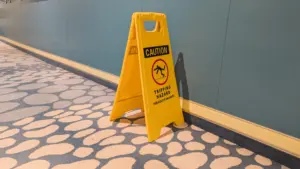
- They failed to fix it or warn you: No cleanup, no wet-floor sign, no “out of order” tag on the broken dryer, no repair after complaints.
- That failure caused your injury: The hazard is what actually hurt you, not something unrelated.
- You suffered real losses: Medical bills, lost wages, pain and suffering, or other damages the injury cost you.
The middle element is where most laundromat cases are decided. It is called notice: did the business have a fair chance to catch the problem and deal with it? That is why documenting how long a hazard was there matters so much.
The Most Common Laundromat Injuries
People picture laundromats as harmless. The mix of water, heat, heavy spinning machines, and cleaning chemicals says otherwise. The injuries we see most often:
- Slips, trips, and falls: The most common laundromat injury by far. Wet floors, leaking machines, spilled detergent, and baskets or carts left in walkways are the usual culprits. A bad fall can mean a broken wrist, a fractured hip, or a head injury. These are classic slip-and-fall claims.
- Burns: Hot water lines, scorching dryer drums, and older commercial pressing equipment can cause serious burn injuries. A faulty water heater that runs too hot is a maintenance failure, not an accident.
- Machine-related injuries: Cuts from rusty or broken parts, and hands or fingers caught in a washer or dryer that keeps running with the door open because a safety switch failed.
- Chemical exposure: Chemical burns, plus eye and lung irritation from detergents, bleach, and cleaning agents. Poor ventilation makes it worse, and the effects can linger.
Many people do laundry in the shared room of an apartment complex rather than a standalone laundromat. The same premises liability rules apply there, and the property owner and management company are usually the ones who answer for it.
Who Can Be Held Responsible for Your Laundromat Injury?
Most people assume the laundromat owner is the only party to blame. The owner is often liable, but rarely the only one.
The business running the day-to-day operation has to keep the floor dry, the machines working, and hazards cleaned up or flagged. The landlord is often on the list too: laundromats commonly rent their space in a strip mall, and the landlord usually controls the common areas like the parking lot, the sidewalks, and the restrooms, so an injury out there can fall to them.
A third party can share the blame as well, whether it is the company that leases, installs, or services the machines or the crew hired to clean the place, when faulty or poorly maintained equipment is what hurt you.
Untangling who controlled what is a big part of these cases, especially when a laundromat is unattended and there is no employee on-site. More than one party sharing the blame is good news for you: it means more than one insurance policy may cover your losses.
Hit by a Car or Attacked at the Laundromat?
Not every laundromat injury happens at the machines. Some open a second claim on top of the premises case.
If a driver hit you while you were loading or unloading laundry, that is an auto claim on top of any premises case, and the driver’s insurance comes into play. These parking-lot pedestrian strikes are more common than people expect.
If you were robbed, assaulted, or attacked on the property, the owner may be liable for negligent security: no working lights, no cameras, no locks, in a spot with a known crime problem. That kind of assault claim holds the property responsible for failing to protect the people it invited in.
What to Do if You’re Injured at a Laundromat in Nevada
What you do in the first hours and days shapes the whole claim:
- Report the injury: Tell the owner or operator right away and ask for a written incident report. If the laundromat is unattended, note the business name and posted contact info and report it as soon as you can.
- Get medical attention: See a doctor even if you feel okay. Slip-and-fall and head injuries often do not show up until later, and a medical record from the same day ties the injury to the laundromat.
- Gather evidence: Photograph the hazard before it dries up, gets mopped, or gets tagged for repair. Grab the names and numbers of anyone who saw it. Keep your medical records and any incident paperwork together.
- Talk to a lawyer: Before you give the insurance company a recorded statement or accept any offer, get advice from a personal injury attorney who can tell you what the claim is worth.
What Your Laundromat Injury Claim Could Be Worth
A laundromat injury claim can cover what the injury actually cost you: medical bills, future treatment, lost wages, property damage, and pain and suffering. In rare cases where the owner acted with real recklessness, punitive damages may be on the table too.
Nevada law shapes that number in a couple of ways. First, the deadline. You generally have 2 years from the date of your injury to file a lawsuit. Miss it and you lose the right to recover, no matter how strong the case.
Second, shared fault. Nevada uses modified comparative negligence. If you were partly to blame, your award drops by your share of the fault. And if you are found more than half at fault (51% or more), you cannot recover at all. So on a $100,000 award where you are found 30% at fault, you would recover $70,000: the award minus your 30% share.
Hold the Right Parties Accountable for Your Laundromat Injury
A wet floor left too long, a dryer that runs with the door open, a parking lot no one lit: these are not freak accidents. They are maintenance failures, and Nevada law lets you hold the responsible parties accountable for what they cost you.
The Richard Harris Law Firm has fought for injured people in Las Vegas since 1980, and there is no fee unless we recover for you. Call us, tell us what happened, and we will look at the case with you to see whether we can help.
Frequently Asked Questions
What Compensation Can I Recover for a Laundromat Injury in Nevada?
You can recover the costs your injury caused: medical bills, future treatment, lost wages, property damage, and pain and suffering. If the laundromat’s conduct was especially reckless, punitive damages may also apply. The value depends on the severity of your injury and how clearly the property’s negligence caused it.
What if I Was Partly at Fault for My Laundromat Accident?
You can still recover as long as you were not more than half at fault. Nevada uses modified comparative negligence (NRS 41.141): your award is reduced by your percentage of fault, and if you are 51% or more at fault you recover nothing. For example, on a $100,000 award where you are found 30% at fault, you would recover $70,000.
Who Is Responsible if the Laundromat Was Unattended When I Was Hurt?
An empty counter does not erase liability. The owner or operator still has to maintain the property and address known hazards, whether or not staff are on-site. The landlord who controls common areas and the vendor who services the machines can also be responsible. Report the injury using the business’s posted contact information as soon as possible.
How Long Do I Have to File a Laundromat Injury Claim in Nevada?
You have 2 years from the date of your injury to file a personal injury lawsuit in Nevada (NRS 11.190(4)(e)). This deadline, called the statute of limitations, applies to laundromat premises liability claims. Miss it and you lose the right to recover, regardless of how clear the property owner’s negligence was.
Do I Need a Lawyer if I Was Injured at a Laundromat in Las Vegas?
You are not required to hire one, but it helps when more than one party may be liable and an insurer is involved. A lawyer identifies every responsible party, preserves evidence like the wet floor before it is cleaned, and handles the insurance company. The Richard Harris Law Firm has represented injured Nevadans since 1980, with no fee unless we recover.