


Subway Slip and Fall Lawyer: Injured at a Nevada Subway Sandwich Shop
Key Takeaways
- Subway’s interior cameras and incident reports cycle on short windows, so a preservation letter has to go out within days of the fall, not weeks. The store’s own incident report (written by the manager on shift) is often the most useful single document in the file.
- Nearly every Subway in Nevada is run by an independent franchisee, not by Subway corporate, which changes who carries the insurance, who sets the cleaning schedule, and who ends up on the lawsuit caption.
- Premises liability at a sandwich shop turns on what the franchisee knew or should have known about the hazard. The spill-duration question (was it on the floor for 30 seconds or 30 minutes?) is what makes or breaks most of these claims.
If you were hurt at a Subway sandwich shop anywhere in Nevada, the company that pays your medical bills is rarely “Subway.” The brand on the sign and the entity that owns the store are almost never the same. Essentially every U.S. Subway is run by an independent franchisee, who carries the insurance, sets the cleaning schedule, and runs the staff.
Subway’s locator currently lists locations in more than 35 Nevada cities, from Las Vegas, Henderson, and North Las Vegas to Reno, Sparks, Pahrump, and Mesquite. Each franchisee is its own defendant.
Which store hosted the fall determines the entire slip-and-fall claim: the operating LLC, the insurance carrier, the cleaning vendor on contract, and the landlord who controls the parking lot all change from one store to the next. The corporate parent only gets pulled in when the conditions trace back to brand-mandated policies.
What Should I Do If I’m Injured at a Subway in Nevada?
Report the fall to the employee or manager on duty before you leave the store, ask for a written incident report, and request a copy. Photograph the spill, the wider scene, and your injuries. Get medical attention the same day, even if you feel okay. Decline recorded statements to any insurer until you’ve spoken with a Nevada premises-liability attorney.
Why a Subway Injury Claim Looks Different From Other Restaurant Cases
A slip at a Subway and a slip at a corporate-owned chain like a sit-down restaurant can look identical from the customer’s side, but they route through different insurers and different defendants. Subway’s franchise model is the reason.
The Doctor’s Associates parent entity licenses the brand, the menu, and many of the operational standards, but the day-to-day duty to keep the floor dry and the walkways clear sits with the franchisee who owns that specific store. Most Subway locations are single-unit operations, and more of them now belong to multi-unit operators who run dozens of stores under one LLC.
That structure changes the case in three concrete ways:
- Franchisee is usually the primary defendant: The franchisee controls staffing, cleaning, and maintenance, which is where the premises duty actually sits. Their commercial general liability policy is what pays most claims.
- Corporate liability is narrower but real: Subway corporate can be on the hook when the hazardous condition traces back to a brand-mandated policy or product. A required cleaning product that leaves slick floors, a corporate-prescribed mat layout, or franchisor knowledge of a recurring hazard at a specific store can pull the parent company into the case.
- Vendors and landlords add layers: Many Subways sit inside gas stations, Walmart locations, truck stops, or strip-mall storefronts. The landlord controls the parking lot and exterior walkways. A separate cleaning contractor may handle the dining area. Each adds its own insurer.
Sorting out which defendant owes what is half the work in a Subway case. Naming the franchisee alone can leave money on the table; naming corporate without a real policy link gets the claim dismissed. We’ve handled enough restaurant slip and fall cases against national chains to know where to look first.
Common Hazards at Subway Sandwich Shops
Across the Subway cases we’ve seen in Nevada, the hazards cluster in three zones, and the dining-area floor is the most common. Self-serve drink stations are the biggest culprit: ice, soda, and condensation drip from the dispenser onto tile that wasn’t designed to grip wet shoes.
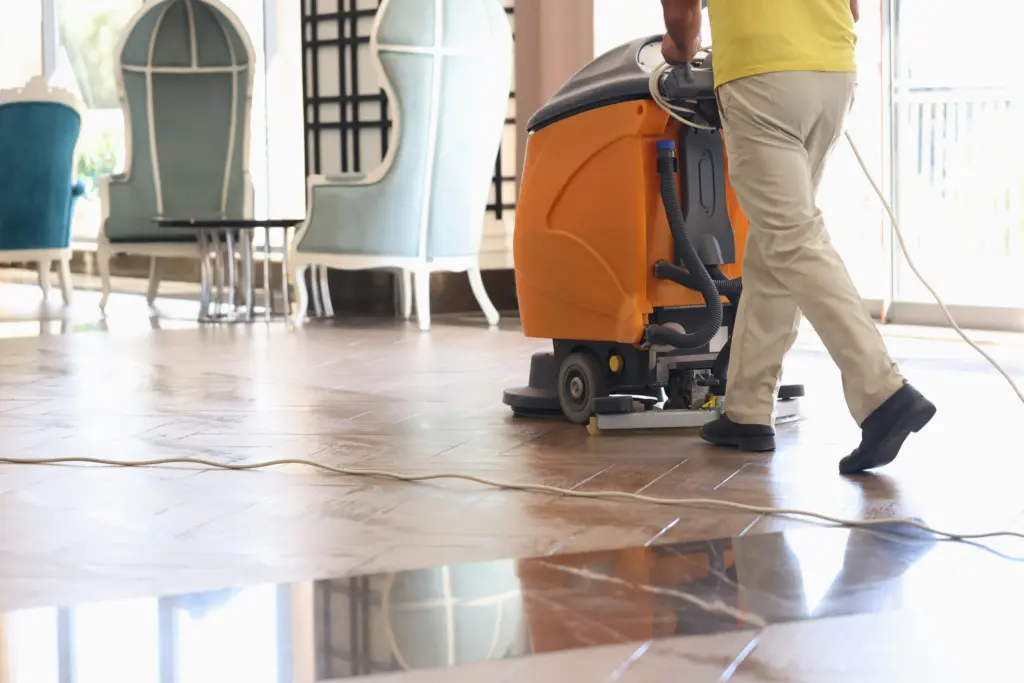
Behind that, ordinary mopping creates a slick surface that lasts longer than most stores’ wet-floor signage stays out. The fast service Subway is built around (a sandwich made in front of you in under two minutes) means staff often mop between rushes rather than during them, and the warning cone goes back in the closet before the floor is fully dry.
The hazards we see repeatedly cluster like this:
- Drink-station spills: Ice, soda, and water on the tile near the fountain are the most common single cause. The drip tray under the dispenser overflows, and the spill spreads several feet before staff notice.
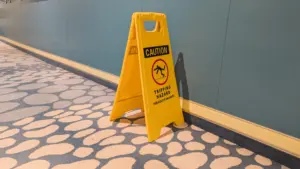
- Freshly mopped floors: Wet floors without a visible “wet floor” sign, or with a sign placed in the wrong spot, are a classic common slip-and-fall hazard that Nevada premises law specifically expects an operator to warn about.
- Tracked-in water from the entry: After a monsoon downpour in Las Vegas or a snow day in Reno, the entry mat does not catch everything. Water several feet inside the door catches customers walking from the menu board to the order line.
- Food, sauces, and produce on the floor: Olives, peppers, and oil-based dressings dropped during the make line slide into the customer side of the counter and stay there until the next sweep.
- Loose floor mats and curled edges: Trip hazards at the entry and behind the order line, especially on mats that have been down for years.
- Parking lot and sidewalk defects: Cracks, potholes, raised concrete seams, and poor lighting around the entrance, often controlled by the landlord rather than the franchisee.
- Restroom hazards: Wet floors near the sink area and broken tile in restrooms that get mopped less often than the dining floor.
The injuries we see most often at fast-casual restaurants run from concussions and other forms of traumatic brain injury, to back and spine injuries, to wrist and hip fractures from older customers catching themselves on the way down. Each of these is the kind of condition Nevada premises law expects the operator to inspect for, fix, or warn customers about within a reasonable amount of time.
Not Every Subway Injury Is a Slip and Fall
This page is built around floor hazards, but a different kind of incident routes to a different kind of claim.
If another customer attacks you, or you’re hit by a vehicle in the parking lot, that’s a different injury case with a different defendant. Reach out to our experienced Las Vegas personal injury lawyers to see how we can help.
Nevada Premises Liability Law and Your Right to Compensation
A customer at a Subway is what Nevada law calls an invitee: a person on the property for the operator’s commercial benefit. Invitees are owed the highest duty of care under Nevada premises law, which Nevada courts and pattern jury instructions frame as a duty to use reasonable care to keep the premises in a reasonably safe condition, to inspect for foreseeable hazards, and to fix or warn about them in a reasonable time (see Foster v. Costco (Nev. 2012)).
In practice, the franchisee has to actively look for hazards and not just react after a customer falls. That standard is at the heart of every premises-liability claim we file, including a convenience-store injury and a retail slip and fall alike.
Three Nevada rules set the timeline and the math of your case:
- 2-year filing deadline: Under NRS 11.190(4)(e), you have 2 years from the date of your injury to file a personal injury lawsuit. Miss it and the claim is gone, regardless of how strong the evidence is.
- Modified comparative negligence: Under NRS 41.141, you can still recover damages if your share of fault is 50% or less. Your award is reduced by your percentage of fault. At 51% or more, you recover nothing.
- Open and obvious is not an automatic bar: A hazard being visible does not automatically defeat your claim. Nevada courts evaluate whether the operator should have anticipated harm despite the visible nature of the hazard, and slip and fall liability can still attach.
Damages typically include medical bills (past and future), lost wages and earning capacity, and pain and suffering. In cases involving a corporate-policy hazard or a franchisee with a documented pattern of ignoring spills, punitive damages may also be available under NRS 42.005.
What to Do After a Subway Slip and Fall
The first 72 hours set the cap on what a claim can recover later.
Start with the manager: ask for the incident report in writing, keep a copy before you leave the store, and write down the manager’s name plus the names of any staff on shift. The franchisee’s insurer will pull their copy of that report whether you have one or not, and you don’t want their version to be the only record.
Photo and video the spill itself, the wider scene (wet-floor signage or the empty spot where it should have been), the floor surface, and your injuries. Interior surveillance at most Subway franchises cycles on a short window (often 14 to 30 days, but franchisee systems vary), so a preservation letter from an attorney should go out the same week.
Get evaluated the same day, even if the injury feels minor. Soft-tissue and head injuries often feel worse on day three than day one, and any gap between the fall and the first medical record gives the insurer an opening to argue your injury came from something else.
If an adjuster (theirs or a third-party carrier’s) calls and asks to record you, decline politely and say your attorney will be in touch. Write down names and phone numbers for anyone who saw what happened before they leave the parking lot.
Fell at a Subway Sandwich Shop in Nevada? Here’s the Next Step
A Subway case is rarely a one-defendant case. The franchisee LLC is out front. A corporate parent may or may not belong behind it. A landlord owns the parking lot and sometimes the sidewalk. A cleaning vendor is occasionally in the mix too.
Sorting that out, naming the right defendants, and locking down the surveillance and incident report before any of it disappears is what the first few weeks come down to. Drink-station spills, freshly mopped tile, a curled mat at the entry, a cracked sidewalk in the parking lot: no matter how the fall happened, the case starts in the same place, with the franchisee.
Contact our premises-liability attorneys here, or call our office 24/7.
Frequently Asked Questions
Can I Sue Subway if I Slipped at a Sandwich Shop in Las Vegas?
Yes, if the operator knew about the spill or wet floor and did not clean it or warn customers in a reasonable time. The defendant is usually the franchisee who owns that specific Subway, not Subway corporate. As an invitee, you are owed the highest duty of care under Nevada law (which in practice requires the operator to use reasonable care to keep the premises reasonably safe and to inspect for foreseeable hazards), and your award is reduced by your share of fault (NRS 41.141) but you can still recover so long as you were 50% or less responsible.
Do I Sue the Franchisee or Subway Corporate After a Slip and Fall?
Usually the franchisee, because the franchisee controls cleaning, staffing, and maintenance at the store. Subway corporate may be added as a defendant when the hazard traces back to a brand-mandated cleaning product, mat layout, or operational policy, or when corporate knew about a recurring problem at that store. A Nevada premises attorney will name every party whose conduct contributed and let the insurers fight out their shares afterward.
What’s the Deadline to File a Subway Injury Claim in Nevada?
You have 2 years from the date of the fall to file a personal injury lawsuit in Nevada under NRS 11.190(4)(e). The clock runs from the accident date, not the date you finished medical treatment. Send a preservation-of-evidence letter to the franchisee well before that deadline; interior surveillance at most Subway stores tends to cycle on a short window (often 14 to 30 days, but franchisee systems vary), and the incident report itself can disappear if no one asks for it in writing.
What Compensation Can I Recover After a Slip and Fall at Subway?
Most cases recover medical bills (past and future), lost wages and earning capacity, and pain and suffering. Where a corporate-mandated policy or a documented pattern of ignored spills is in play, punitive damages may also be available under NRS 42.005. Your share of fault reduces the award under NRS 41.141, but as long as you are 50% or less at fault, you can still recover.
What if the Subway Is Inside a Gas Station, Walmart, or Truck Stop?
More than one operator may share liability. The Subway franchisee owns the duty inside the sandwich-shop footprint, the host store (gas station, big-box, or truck stop) owns the duty over the common area and parking lot, and a separate cleaning vendor may carry its own coverage. A Nevada premises attorney will pull each lease and operating agreement to identify every party whose conduct contributed to the fall.