



Las Vegas Strip Accident Lawyer: Who Is Liable When You’re Hurt on the Boulevard
Key Takeaways
- A Strip crash usually has more than one defendant. The driver who hit you, the rideshare or taxi company they were working for, the resort that controls the driveway, and the contractor running the lane closure each carry separate insurance, and each one is a separate source of recovery.
- Nevada does not let you sue a casino or bar for over-serving an adult. When a resort is genuinely on the hook, it’s for something the property controlled: a blind driveway, an overflowing valet lane, or security that watched a problem build and did nothing.
- Almost every inch of the Boulevard is covered by a private camera the public can’t subpoena on its own. Nevada’s gaming regulator makes a casino keep only seven days of the surveillance video it is required to record, and the cameras on a driveway or garage ramp aren’t covered by even that, so the footage that proves your case is usually gone before the first adjuster calls.
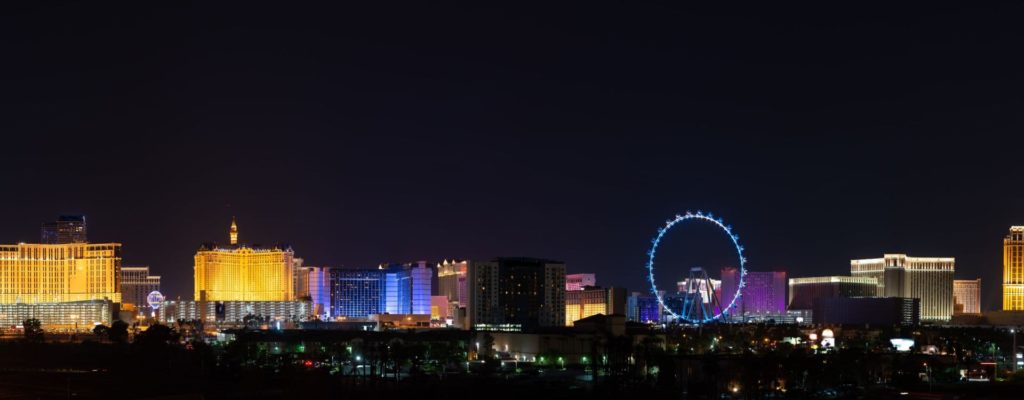
The Strip is roughly four miles of Las Vegas Boulevard between Sahara Avenue and Russell Road, and it behaves like nowhere else in Nevada. Drivers who have never seen the road are hunting for a porte-cochere entrance in moving traffic. Pedestrians spill off bridge escalators in waves. Rideshare drivers, cabs, airport shuttles, and stretch limos fight for the same 40 feet of curb. Then something goes wrong, and you’re sitting on a sidewalk in front of a resort with a cracked phone and nobody’s information.
What happens next isn’t like a normal Las Vegas car accident claim. On the Boulevard, the vehicle that hit you may be one of three or four parties who contributed, the property you were standing on is owned by a corporation with in-house counsel, and half the witnesses have flights home tomorrow. Sorting out who is actually responsible, fast enough to prove it, is the whole game.
Who Is Liable for an Accident on the Las Vegas Strip?
The at-fault driver is the starting point, but Strip liability rarely stops there. A rideshare or taxi company can be responsible for a driver working the curb, a resort can be responsible for a driveway or valet lane it designed and staffed, and a contractor can be responsible for a detour or lane closure that hid what was coming. Nevada lets you pursue all of them in one claim, and their fault gets divided by percentage.
What Makes Las Vegas Boulevard Different From Any Other Road?
Most crashes in the valley happen at signalized intersections between people who live here. Strip crashes happen in a compressed corridor where almost nobody knows the road, and the road itself is built to slow you down and pull your eyes off it.
- Bridge-fed pedestrian surges: Median barriers along most of the Boulevard funnel foot traffic onto the elevated crossings at Tropicana, Flamingo, Harmon, and Spring Mountain. Crowds pour down the escalators and stairs in bursts, then hit curb level right where vehicles are turning into resort drives.
- Porte-cochere entries: Resort front drives cut into the Boulevard with short approach lanes and heavy landscaping.
- Curbside competition: Loading and unloading never stops here. Double-parking, sudden stops, and aggressive merges to reach a pickup spot cause a real share of Strip collisions, and they leave rear-end and sideswipe damage patterns that insurers love to blame on the person behind.
- Live construction: The old Mirage site is an active build zone for Hard Rock Las Vegas, with the guitar-shaped tower going up where the volcano used to sit and much of the front drive fenced off. This means dump trucks, mixers, and shifting lane geometry on a road that’s already confusing.
- Impaired drivers at every hour: There’s no last call here, so the risk window never closes. A drunk driving crash on the Boulevard tends to produce worse injuries than the same impact elsewhere, because the driver never brakes.
Who Can Be Held Responsible After a Strip Crash?
The honest answer is that it depends on what the evidence shows, and that’s why the investigation matters more here than almost anywhere else. These are the parties who commonly end up on the claim.
- The at-fault driver: Speeding, distraction, unsafe lane changes, and failing to yield to a pedestrian in a crosswalk (a duty Nevada puts squarely on the driver under NRS 484B.283) are the usual findings. Nevada’s minimum liability coverage is only 25/50/20 under NRS 485.185, which a serious Strip injury blows through quickly.
- Rideshare drivers and their companies: Coverage in an Uber or Lyft collision turns on what the app was doing at impact, and it shifts between waiting, en route, and passenger aboard.
- Taxi, limo, and shuttle operators: Commercial carriers carry higher limits and can also be liable directly for negligent hiring, thin training, or a vehicle they didn’t maintain.
- The resort or property owner: Not for the drinks. For the driveway. A front drive with blocked sightlines, a valet lane that routinely backs into a travel lane, unmarked pedestrian paths across a garage exit, or a security officer waving a car into traffic are all conditions the property created and controls.
- Construction contractors: A contractor can be liable when its traffic control failed: bad signage, an unlit detour, equipment parked where it blocked visibility, or a lane taper that didn’t match the plan.
- Vehicle and parts manufacturers: Brake, steering, tire, and airbag defects come up in a minority of cases, but when a component failed, product liability puts the manufacturer in the case alongside the driver.
One theory you’ll see repeated online simply doesn’t work in Nevada: you cannot sue a resort, bar, or club because it over-served an adult who then hurt someone. NRS 41.1305 gives licensed vendors civil immunity for serving alcohol to anyone 21 or older.
Where a resort can be liable for another person’s conduct is negligent security. Nevada’s innkeeper statute, NRS 651.015, says a hotel or casino generally isn’t responsible for an injury caused by someone who doesn’t work there unless the wrongful act was foreseeable. Foreseeable, in practice, means the property knew or should have known that this kind of thing happens in this spot and didn’t staff or respond accordingly. That’s a fact question, and it’s usually answered by the property’s own incident history.
What Evidence Disappears First on the Strip?
Every crash scene degrades. This one degrades on a schedule.
Private video. Almost none of the cameras watching this road are public. The gaming regulator sets only a floor, and it is a short one: Standard 9 of the Nevada Gaming Commission’s Regulation 5 surveillance standards requires a licensed casino to keep the video it is obligated to record for just seven days, a minimum that rises to 15 days on April 3, 2027. Nothing in that rule reaches the porte-cochere, the garage ramp, or the stretch of sidewalk where you were actually hurt. Those systems, plus the buses and shuttles running the corridor, overwrite on whatever cycle the operator picked. A written preservation demand to the right corporate contact is what stops the clock, and it has to go out in days, not months.
Witnesses. The person who saw the whole thing checks out Sunday. Get a name, a cell number, and an email before anyone leaves.
The property’s own paperwork. If a resort, garage, or valet operation was involved, ask staff to open an incident report and get the number before you leave. Security also generates internal logs and dispatch records that never surface unless someone asks.
The police report. Metro works injury crashes on the Strip, and the officer’s diagram, measurements, and impairment notes carry weight with adjusters. If no officer investigates, NRS 484E.070 still requires a written report to the DMV within 10 days when a crash involves injury, death, or at least $750 in property damage (the SR-1 form).
The scene itself. Cones move and lane closures shift overnight. Photograph the road geometry, the signage, and the sightlines while they still match the day of the crash.
How Does Nevada Divide Fault When Several Parties Share the Blame?
Multi-party fault is the norm on the Strip, so the rule that splits it matters more here than in a two-car fender bender out in Summerlin.
Nevada uses modified comparative negligence, set by NRS 41.141. You can still recover as long as your share of the fault is not greater than the combined fault of the parties you’re suing. Exactly 50% still collects. At 51% you recover nothing. Whatever you do recover is then reduced by your own percentage, so carrying 20% of the blame leaves you 80% of the award.
That combined-fault language is why naming every responsible party early is so important. If a resort’s driveway and a contractor’s detour each contributed, their percentages stack on the defense side of the comparison, and your 30% suddenly looks small next to their 70%. Leave them out of the case and you’re comparing yourself to one driver alone.
Pedestrians face this constantly on the Boulevard, because crossing outside a marked crosswalk shifts fault onto the person on foot without automatically ending the claim. The specifics are laid out in Nevada’s crosswalk and pedestrian laws.
What About Assaults and Garage Collisions on Resort Property?
Not every Strip injury involves a moving vehicle on the Boulevard, and two other patterns come up often enough to name.
Assault and battery on the property. Fights on casino floors, at pool venues, in nightclub lines, and in parking structures can support two claims at once: a direct assault and battery claim against the person who hurt you, and a negligent security claim against the property if the incident was foreseeable and staff didn’t respond.
Parking garage and valet collisions. Most resorts route rideshare pickups into a designated garage level rather than the front drive, which concentrates vehicles, luggage, and pedestrians in tight ramps with poor sightlines. Valet damage, backing collisions, and pedestrians struck in a Las Vegas parking structure are their own category. Injuries inside the resort rather than on the road fall under hotel and casino injury claims.
What Should You Do in the First 48 Hours?
- Get examined, even if you feel fine: Adrenaline masks soft tissue and head injuries for a day or two, and a gap between the crash and your first medical visit is the first thing an adjuster attacks.
- Report it on the property, not just to police: An incident report creates a record inside the company that owns the cameras.
- Photograph more than the cars: Shoot the driveway, the signage, the cones, the curb, and the direction each vehicle was facing.
- Say nothing recorded: The other side’s adjuster may call within 48 hours. You are not required to give a recorded statement, and early ones get quoted back at you for years.
- Watch the filing deadline: The deadline to sue in Nevada is generally 2 years from the injury under NRS 11.190(4)(e), and shorter notice rules apply when a government entity is involved.
Why a Strip Claim Gets Harder Every Week You Wait
Nothing about this corridor works in your favor after the fact. The witnesses live somewhere else. The cameras belong to companies with legal departments. The construction zone that caused the crash gets reconfigured. And the insurers who write these policies handle Strip claims daily, so they already know what a delayed, thinly documented file is worth to them.
The counterweight is speed and knowing which doors to knock on. Richard Harris Law Firm has worked the Las Vegas Boulevard corridor since 1980, and we know which corporate entity actually owns a given property, who receives its preservation letters, and how its carrier behaves once the video exists. Call and we’ll look at what happened and see whether we can help. There’s no fee unless we recover for you.
Frequently Asked Questions
Do I Need a Las Vegas Strip Accident Lawyer if the Other Driver Admitted Fault?
An admission at the scene rarely survives the insurer’s investigation, and it doesn’t reach the other parties who may share fault. On the Strip, a resort driveway, a construction detour, or a rideshare company’s policy can all be part of the recovery, and Nevada’s minimum coverage of 25/50/20 often falls short on its own.
Can I Sue a Casino for Serving the Driver Who Hit Me?
No. Nevada gives licensed alcohol vendors civil immunity for serving anyone 21 or older under NRS 41.1305. The Nevada Supreme Court declined to create that liability in Hinegardner v. Marcor Resorts, and the Legislature later codified it. The impaired driver remains fully liable. A resort can still be liable for its own conduct, like an unsafe driveway or a foreseeable security failure.
How Do I Get Resort Surveillance Footage of My Strip Accident?
You generally can’t get it by asking at the desk. Resort and garage systems are private, and they overwrite on a rolling cycle. The practical route is a written preservation demand to the property’s legal or risk department, sent within days of the crash, followed by a subpoena if the claim goes into litigation.
Can I Still Recover if I Was Partly at Fault on the Strip?
Yes, as long as your fault isn’t greater than the combined fault of the parties you’re suing. Nevada’s modified comparative negligence rule (NRS 41.141) lets you recover at exactly 50% but bars you at 51%, and it cuts your award by your own percentage. Naming every responsible party improves that comparison.
I’m a Tourist Who Flew Home. Can a Las Vegas Strip Accident Lawyer Still Handle My Case?
Yes. Most Strip injury clients live somewhere else, and the case is handled remotely through phone, email, and electronic signatures. What matters is starting before the evidence goes: Nevada’s 2-year deadline under NRS 11.190(4)(e) is generous, but resort video is not.
Does a Police Report Decide Who Pays for a Strip Crash?
No, but it carries real weight with adjusters because of the officer’s diagram, measurements, and impairment findings. If Metro doesn’t investigate, Nevada still requires a written report to the DMV within 10 days when there’s injury, death, or at least $750 in property damage.