



Diminished Value Claim in Nevada: Getting Paid for What Your Car Lost in the Crash
Key Takeaways
- Your car is worth less after a crash even when the body work is flawless. That gap between what it was worth the morning of the wreck and what it’s worth now is diminished value, and it is a real, recoverable loss in Nevada.
- You collect diminished value from the at-fault driver’s insurance company, not your own. Your collision coverage pays to fix the car; it does not pay you back for the resale hit.
- The property damage release the adjuster sends along with your repair check can wipe out the diminished value claim before you ever make it. Read every line before you sign anything.
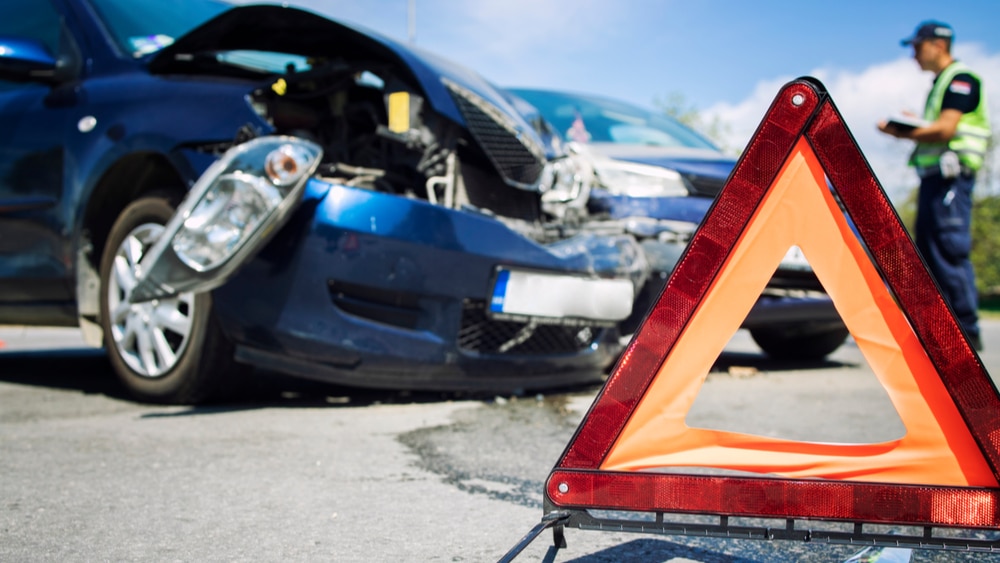
The body shop did good work. New quarter panel, color match you can’t spot in the Las Vegas sun, everything lines up. Your truck looks the way it did before somebody blew the light at Sahara and Valley View and folded the rear corner.
Then, eight months later, you take it to a dealer on Auto Show Drive to trade in. The appraiser runs the VIN, the accident shows up on the history report, and the number that comes back is thousands under what the same truck brings without that entry.
Nothing is wrong with the vehicle. The record is what costs you. And it is a loss the at-fault driver caused, which makes it part of the same car accident claim as your medical bills and your repair invoice, even though almost nobody thinks to ask for it.
What Is a Diminished Value Claim?
A diminished value claim is a demand for the resale value your vehicle permanently lost by having a crash on its record: the gap between what it was worth the moment before impact and what it is worth repaired. Repairs restore the car’s condition, not its market value. In Nevada you claim it against the at-fault driver’s liability insurer, as part of a property damage claim separate from any injury claim, with its own three-year deadline.
The Three Kinds of Diminished Value
Adjusters and appraisers do not treat “diminished value” as one thing. Three distinct losses hide under the term, and knowing which one you’re claiming changes what you have to prove.
| Type | What it measures | When it applies |
|---|---|---|
| Inherent diminished value | The value lost purely because the car now has a crash on its record, assuming the repair was done correctly | Almost every repaired vehicle. This is the claim you will usually be making. |
| Repair-related diminished value | Additional value lost because the repair itself fell short: mismatched paint, panel gaps, aftermarket parts, a rattle that came back | When the shop’s work is visibly or mechanically inferior to factory condition |
| Immediate diminished value | The drop in value between the moment before impact and the moment after, before any repair happens | Mostly a litigation measure. It matters when the car is sold as-is or never repaired. |
Inherent diminished value is the one that catches people off guard, because it survives a perfect repair. A buyer at a Henderson dealership or a private party on Marketplace sees an accident entry and assumes hidden damage, whether or not any exists. That assumption is priced into every offer you get.
Repair-related loss stacks on top. If the shop used aftermarket sheet metal instead of factory parts, or the clear coat is already crazing, you have a second, separate loss. Keep the repair order and every supplement, because how the vehicle was repaired is the evidence for that piece of the claim.
Who Pays Diminished Value in Nevada?
The at-fault driver’s insurer pays. Not yours.
That one fact decides most diminished value claims in Las Vegas, and it trips up people who assume their own carrier handles everything after a wreck.
The two claims rest on different foundations. Going after the at-fault driver’s liability coverage is a negligence claim, and Nevada negligence law entitles you to be made whole for the full loss that driver caused. A car worth less than it was before the crash is part of that loss, and a repair invoice does not cover it.
Your own collision coverage is a contract. It obligates your insurer to do a specific, limited thing: pay to repair or replace the vehicle, minus your deductible. Standard Nevada auto policies cap the insurer’s obligation at repair or replacement cost, which leaves no room for a resale-value payment on top. Pull out your policy and read the limit of liability language on the physical damage section; that clause is the whole answer. Your declarations page will point you to it.
The narrow first-party exception: if your own policy contains an endorsement that specifically provides diminished value coverage, or you are claiming under uninsured or underinsured motorist property damage written to stand in the shoes of the at-fault driver, a first-party claim can work. Nevada does not require you to carry that property damage coverage, so plenty of policies here do not have it. These are the exceptions, and they turn entirely on the wording of your policy rather than on Nevada law. Do not assume you have one because an agent once told you that you had “full coverage.”
Two other Nevada rules shape the number. Fault gets apportioned under the state’s comparative negligence rule, NRS 41.141, so if you are found 20% responsible for the collision your diminished value recovery drops by 20%, and you recover nothing only if your share of the blame is greater than the other driver’s. And the at-fault driver’s property damage coverage may be thin: Nevada’s minimum is $20,000 per accident, which the repair bill on a late-model vehicle can exhaust before diminished value ever comes up.
How Insurers Calculate Diminished Value: The 17c Formula
Ask an adjuster to value your loss and you will almost certainly get a number from the 17c formula. It is worth understanding, because it is designed to shrink.
The formula runs in four steps:
- Base value: The adjuster pulls the vehicle’s pre-accident market value from a guide such as NADA or Kelley Blue Book.
- The 10% cap: That value is multiplied by 0.10. Whatever your car was worth, the formula has now decided the maximum diminished value is one tenth of it. Everything after this only reduces the figure further.
- Damage modifier: The capped number is multiplied by a factor for severity, running from 1.00 for severe structural damage down to 0.00 for no structural damage. Panel and cosmetic repairs land at the low end.
- Mileage modifier: The result is multiplied again by a mileage factor, 1.00 at the low end of the odometer and 0.00 once the vehicle passes roughly 100,000 miles.
Two multipliers, each capable of returning zero, applied on top of a ceiling already set at 10%. That is why the 17c output on a five-year-old commuter with 90,000 miles can come back as a few hundred dollars, or nothing.
Here is the part insurers do not volunteer. The 17c formula is not Nevada law. It is not in the Nevada Revised Statutes, it is not a rule of the Nevada Division of Insurance, and no Nevada court requires anyone to use it. It came out of a Georgia court order. In State Farm Mutual Automobile Insurance Co. v. Mabry, a 2001 class action, the trial court had to value more than 25,000 claims at once and approved a generic formula with a 10% cap as a shortcut for that one case. The name comes from where the formula appeared in the order. Insurers have used it as an internal worksheet ever since. When an adjuster presents a 17c figure as “how it’s calculated,” they are describing their own worksheet, not a legal standard you are bound by.
You are entitled to prove your actual loss instead. That is what an appraisal is for.
What an Independent Appraisal Actually Requires
An appraisal is the counterweight to the worksheet, but only if it holds up. A printout from an online estimator will not move an adjuster and will not survive a deposition. A usable appraisal has specific parts:
- A qualified appraiser: Someone with automotive appraisal credentials and experience testifying or supporting claims, not a body shop manager giving you a verbal opinion.
- Comparable sales in your market: Actual recent sales of the same year, make, model, trim, and mileage range in the Las Vegas valley, split into clean-history vehicles and accident-history vehicles. The spread between those two sets is your loss, demonstrated rather than asserted.
- The complete repair file: The original estimate, every supplement, the parts list showing whether components were factory or aftermarket, and the final invoice. Repair severity drives the number.
- Photographs from both ends: Pre-repair damage photos and post-repair condition photos. If you did not take pre-repair pictures, the shop and the adjuster almost certainly did.
- The vehicle history entry: A pull from CARFAX or a similar service showing the accident record that a future buyer will see. This is the stigma, documented.
- Stated methodology: A written explanation of how the appraiser reached the figure, signed, with credentials attached.
Timing matters. Comparable sales reflect a moment in the market, so an appraisal done close to the repair date is far easier to defend than one commissioned a year later. The repair file is also easier to get while the shop still has an open record.
Then comes the demand: appraisal, repair file, history report, and a specific dollar figure sent to the at-fault carrier. Expect a denial or a 17c number back. A lowball opening offer is a negotiating position, not a valuation.
What Weakens a Diminished Value Claim
Not every vehicle carries a meaningful loss, and being honest about that saves you an appraisal fee.
Age and mileage do most of the damage. A twelve-year-old sedan with 140,000 miles has already absorbed most of the depreciation it will, and the accident entry barely moves the resale number. Prior accidents on the same VIN do the same, because the second entry costs less than the first. Low-value vehicles run into the same wall from the other direction: 10% of a small number is a smaller number.
Fault is the other threshold. If you caused the collision, there is no at-fault carrier to bill. Where responsibility is genuinely contested, how the insurers assign fault will decide the diminished value claim along with everything else in the file.
Leased vehicles create a wrinkle rather than a bar. The leasing company holds title and takes the resale hit at turn-in, so the recovery may run to the lessor, though excess wear-and-tear charges can still land on you.
Two situations belong in different conversations entirely. If the insurer declared your vehicle a total loss, there is no repaired car to devalue, and the fight is over actual cash value when your car is totaled instead. And if you are still trying to get the body work paid for at all, getting repair bills covered comes first; diminished value is the claim you make after the car is fixed.
One last trap. Property damage settles fast, usually weeks before an injury claim goes anywhere. The adjuster mails a check for the repairs with a release attached, and the release language often covers all property damage arising from the collision. Sign it and the diminished value claim goes with it. Nevada gives you three years on property damage under NRS 11.190(3)(c), so there is no reason to rush a signature you cannot take back.
Your Car Lost Value. Somebody Else Caused That.
Diminished value is the quietest loss in a Las Vegas car accident file. There is no bill for it, no adjuster raises it, and it does not show up until the day you try to sell or trade and find out the market already knows what happened.
It is still money the at-fault driver took from you, and Nevada law lets you ask for it back. Whether it is worth pursuing on its own depends on the car, but if you also have an accident claim in progress, it belongs in the same demand rather than being left on the table.
Call us and we’ll look at the crash, the repair file, and the release the adjuster wants signed, and tell you honestly whether there’s a claim worth making. We’ve handled Las Vegas car accident files since 1980, the consultation is free, and there is no fee unless we recover.
Frequently Asked Questions
How Do I File a Diminished Value Claim in Nevada?
Send a written demand to the at-fault driver’s liability insurer with an independent appraisal, your complete repair file, and a vehicle history report showing the accident entry. Nevada gives you three years from the crash for property damage claims. There is no state form and no filing fee; the claim lives or dies on the appraisal.
Can I File a Diminished Value Claim With My Own Insurance in Nevada?
Generally no. Collision coverage is a contract that obligates your insurer to repair or replace the vehicle, and standard Nevada policies cap the obligation there, with no separate payment for lost resale value. The exceptions are a diminished value endorsement or uninsured motorist property damage coverage, and both turn on your policy wording.
How Long Do I Have to File a Diminished Value Claim in Nevada?
Three years from the date of the crash. Diminished value is damage to personal property, and Nevada’s deadline to sue (statute of limitations) for injury to personal property is three years under NRS 11.190(3)(c). That is a year longer than the two-year injury deadline, so the property damage claim can outlive the injury clock.
Can You Claim Diminished Value on a Leased Car?
Sometimes, but the leasing company usually owns the claim because it holds the title and absorbs the resale loss at turn-in. Read your lease: if it charges you for diminished value or excess wear tied to accident history, you have a direct out-of-pocket loss you can pursue against the at-fault driver’s insurer.
Is the 17c Formula the Legal Standard in Nevada?
No. The 17c formula is an insurance industry worksheet, not Nevada law. It appears nowhere in the Nevada Revised Statutes or the Division of Insurance rules. It caps the payout at 10% of your car’s value, then applies two multipliers that can each drop the figure to zero. You can prove your actual loss with an independent appraisal instead.