

Injured at Terrible’s: Las Vegas Premises Liability Lawyer
Key Takeaways
- Nevada gives you 2 years from the date of injury to file a personal injury lawsuit under NRS 11.190(4)(e); surveillance footage, fuel-pump logs, and incident reports at a Terrible’s get overwritten quickly, so preservation matters early.
- Most Terrible’s locations bundle a fuel island, convenience store, car wash, and slot room on one property, which can put more than one operator on the hook for the same injury.
- Under Nevada’s modified comparative negligence rule (NRS 41.141), you can still recover compensation if your share of fault is 50% or less.
If you were hurt at a Terrible’s anywhere in the Las Vegas valley, who pays your medical bills depends on where on the property the accident happened and which operator runs that piece of the lot. Most of the chain’s Nevada locations are not just gas stations: they bundle a fuel island, a 24-hour convenience store, a tunnel car wash, and a small slot room on a single property. Each of those zones is its own premises-liability surface, with its own staff, its own insurer, and sometimes its own outside contractor. Roughly 80% of Terrible’s stores sit in southern Nevada, which means most of these claims land in Clark County, where we’ve handled premises cases since 1980.
What Should I Do If I’m Injured at a Terrible’s in Nevada?
Report the incident to the manager on duty before you leave, ask for a written incident report, and request a copy. Photograph the hazard, the wider scene, and your injuries. Get medical attention the same day, even if you feel okay. Decline recorded statements to any insurer until you’ve spoken with a Nevada premises-liability attorney.
Why a Terrible’s Injury Claim Looks Different From Other Gas Station Cases
A slip at the fuel pump and a fall on the gaming-floor walkway look identical to the customer who got hurt, but they route through different insurers and different defendants. That makes a Terrible’s claim harder to handle on your own and changes how an attorney builds the case from day one.
Most Terrible’s properties layer four operations on top of each other:
- Fuel island: Customer is an invitee of Terrible’s (operated by Terrible Herbst, Inc.); the fuel itself is typically Chevron-branded, which can introduce a separate fuel supplier into the chain of liability if the spill or equipment defect originated upstream.
- Convenience store: Same operator on paper, but staffed and maintained on a different schedule than the pumps, with its own cleaning contractor and product-stocking schedule.
- Tunnel car wash: Often runs as a sub-operation with its own equipment, its own maintenance contractor, and its own insurer.
- Gaming area: Slot rooms at convenience-store properties are still subject to Nevada’s gaming-floor premises-liability standards, even when the room is small.
It also changes the kind of claim you may have. A pedestrian hit by a car cutting across the fuel lane or backing out of a pump bay is closer to a Las Vegas car accident than a slip-and-fall, and the at-fault driver’s auto insurer ends up alongside the property carrier on the case. Sorting out which carrier owes what is a fight on its own; doing it while you’re injured and the adjuster is calling daily is unfair on its face.
Common Hazards at Terrible’s Locations
Across the cases we’ve handled at convenience-store-and-gas-station properties, the hazards at Terrible’s cluster around four zones, and the worst ones are usually outside. Fuel-island spills are the most common: diesel residue, oil drips from leaking vehicles, and overflow from self-serve pumps make the concrete slick well outside the immediate pump pad, and the slope of a Nevada lot in summer heat does the rest. The tunnel car wash is right next door. Standing water tracks out onto the approach lanes, and the brush, dryer, and conveyor mechanisms inside the bay can injure customers who step out of a vehicle mid-cycle.
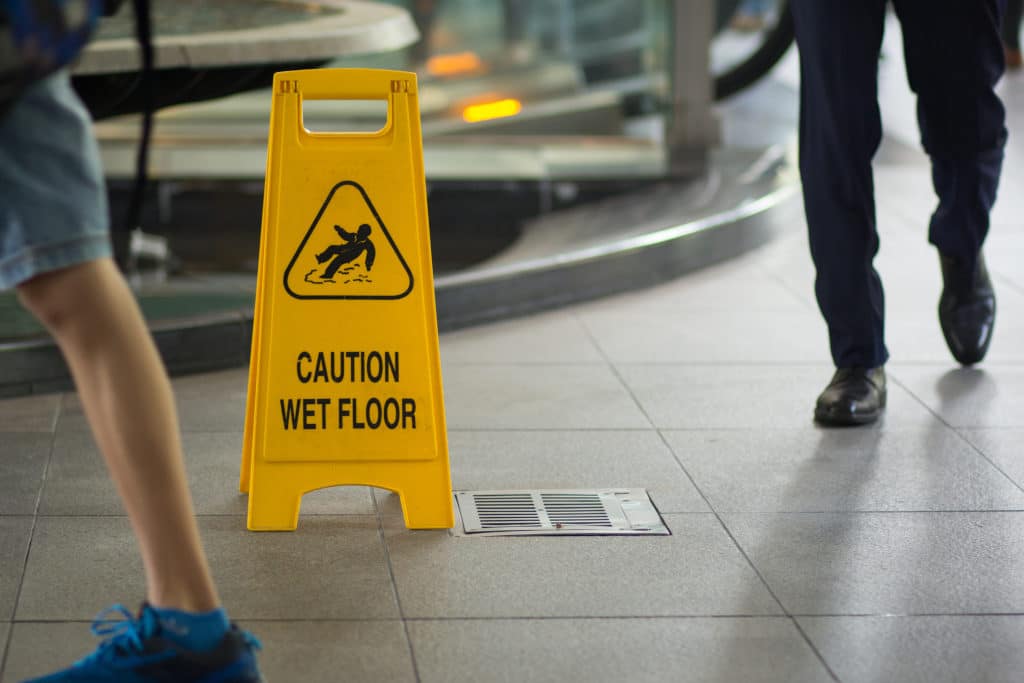
The hazards inside the property are quieter but just as common. In the gaming area, tightly placed slot machines, chair backs in narrow aisles, and cords running across walkways create trip hazards that the room’s lighting often hides. In the convenience store, the usual culprits are freshly mopped floors without warning signage, slushy and coffee spills near self-serve drink stations, and stocked product that extends into the aisles. Each of these is the kind of condition Nevada premises law expects an operator to inspect for, fix, or warn customers about within a reasonable window.
Nevada Premises Liability Law and Your Right to Compensation
A customer at a Terrible’s is what the law calls an invitee: someone on the property for the operator’s commercial benefit. Nevada owes invitees the highest duty of care, which means the operator has to actively look for hazards, fix or warn about them in a reasonable time, and not just react after a customer gets hurt. That standard sits at the core of every premises-liability claim we file.
Three Nevada rules drive the timeline and the math of your case:
- 2-year filing deadline: Under NRS 11.190(4)(e), you have 2 years from the date of your injury to file a personal injury lawsuit. Miss it and the claim is gone, regardless of how strong the evidence is.
- Modified comparative negligence: Under NRS 41.141, you can still recover damages if your share of fault is 50% or less. Your award is reduced by your percentage of fault. At 51% or more, you recover nothing.
- Open and obvious does not bar recovery: Nevada courts have rejected the idea that a hazard being open and obvious automatically defeats your claim, a doctrine the Nevada Supreme Court framed in Foster v. Costco.
Damages typically include medical bills (past and future), lost wages and earning capacity, and pain and suffering. The injuries we see most often at gas-station and convenience-store properties range from concussions and other forms of traumatic brain injury, to back and spine injuries from falls, to burn injuries in the rare cases when fuel or hot liquids ignite.
What to Do After a Terrible’s Injury
The first 72 hours after the accident set the ceiling on what a claim can recover later. Four steps matter most:
- Notify the manager and get an incident report: Ask for the report in writing and keep a copy. Don’t rely on the store to send it later. Get the manager’s name and the names of any employees on shift.
- Preserve evidence early: Photo and video the exact spot, the hazard, the wider scene (including any signage or lack of it), and your injuries. Surveillance at convenience-store and gas-station properties typically cycles anywhere from 14 days to 3 months depending on the operator and equipment, so an attorney’s preservation letter should go out the same week.
- Get medical care the same day: Even if the injury feels minor, get evaluated. A delay of even a few days lets the insurer argue your injury came from something else, and soft-tissue and head injuries often present worse on day three than day one.
- Document witnesses and decline recorded statements: Write down names and phone numbers for anyone who saw what happened. If a Terrible’s adjuster or a third-party insurer calls and asks to record you, decline politely and tell them your attorney will be in touch.
Hurt at a Terrible’s? Richard Harris Law Firm Can Help
A Terrible’s injury case usually involves more moving parts than the average slip-and-fall: multiple operators, a tight evidence-preservation window, and an insurer-side team that handles these claims every week. We’ve practiced Nevada personal injury law since 1980, recovered billions for our clients, and maintain a 99% satisfaction rate across thousands of cases. Whether the injury happened at the pump, in the car wash, in the slot room, or in the store itself, we’ll line up the right defendants, the right experts, and the right damages model. Meet the team on our attorneys page or call us at any hour, in English, Spanish, or Tagalog.
Frequently Asked Questions
Can I Sue Terrible’s if I Slipped at a Fuel Pump in Las Vegas?
Yes, if Terrible’s or one of its contractors knew about the spill or grease and didn’t clean it or warn customers in a reasonable time. As an invitee, you’re owed the highest duty of care under Nevada law. Your award is reduced by your share of fault, but you can recover as long as you were 50% or less responsible (NRS 41.141).
What’s the Deadline to File an Injury Claim Against Terrible’s in Nevada?
You have 2 years from the date of the injury to file a personal injury lawsuit in Nevada under NRS 11.190(4)(e). The clock runs from the accident date, not the date you finished medical treatment. Send a preservation-of-evidence letter to the operator well before that deadline; surveillance video at convenience-store and gas-station properties typically cycles anywhere from 14 days to 3 months depending on the operator and equipment.
Who Can I Sue if I Was Hurt in the Car Wash or Gaming Area at a Terrible’s?
Often more than one party. Terrible’s usually operates the property directly, but the car-wash equipment may be installed and maintained by a third-party contractor, and a slot/gaming room may run under a separate operator with its own insurer. Your attorney will name every defendant whose conduct contributed and let the insurers fight out their shares afterward.
What Evidence Should I Collect After a Terrible’s Injury?
At minimum: photos of the hazard from multiple angles, photos of the wider scene including signage or its absence, photos of your visible injuries, a written incident report with a copy for you, the names and phone numbers of witnesses, and the names of any employees on shift. Get a same-day medical evaluation; the medical record is itself evidence.