



Airbag Injury Lawyer: Can You Get a Head Injury From an Airbag in Nevada?

Key Takeaways
- Airbags deploy at speeds of 100 to 220 mph—fast enough to cause concussions, traumatic brain injuries (TBI), and facial fractures even in accidents that aren’t particularly severe.
- Nevada’s 2-year statute of limitations under NRS 11.190(4)(e) applies to airbag injury claims, so acting quickly helps preserve evidence and protect your right to compensation.
- Multiple parties can be held liable for an airbag head injury, including the at-fault driver, the vehicle manufacturer, and the airbag manufacturer—an experienced attorney can identify every responsible party.
If you’ve been in a car accident where the airbag deployed, you already know how jarring and disorienting the experience can be. What you might not expect is that the very device designed to save your life could also be the source of your injuries. Airbags have saved more than 50,000 lives since they became standard equipment in passenger vehicles, according to the National Highway Traffic Safety Administration (NHTSA). They reduce driver fatalities in frontal crashes by 29%.
But that protection comes with a tradeoff. Airbags inflate with explosive force in a fraction of a second, and that rapid deployment can cause injuries ranging from minor facial bruises to severe traumatic brain injuries. If you or a loved one was hurt by an airbag during a car accident in Nevada—or because of a defective airbag that malfunctioned—you may have grounds to pursue compensation from the at-fault driver, the vehicle manufacturer, or the airbag maker.
Can an Airbag Cause a Head Injury?
Yes. Airbags inflate at 100 to 220 mph and can strike the head and face with enough force to cause concussions, traumatic brain injuries (TBI), facial fractures, and eye damage. Head injuries are among the most common airbag-related injuries because frontal airbags deploy from the steering wheel and dashboard directly toward the occupant’s upper body. If you’ve suffered a head injury from airbag deployment, consult a personal injury attorney to understand your legal options.
What Are the Most Common Injuries From Airbag Deployment?
Airbags primarily protect your upper body from striking the steering wheel, dashboard, or windshield during a collision. Because they deploy directly toward your head and torso, most airbag injuries affect those areas. Here are the injuries our attorneys see most often in airbag deployment cases:
- Facial and eye injuries: Bruising, lacerations, broken noses, and cheekbone fractures are common when the airbag strikes your face at high speed. Chemical compounds released during deployment can also cause eye burns and retinal detachment, and black eyes are frequently reported by drivers who were positioned close to the steering wheel.
- Concussions and traumatic brain injuries: The force of an airbag hitting your head—or the sudden whipping motion that follows—can cause your brain to move inside the skull. This may result in a concussion, or in more serious cases, a diffuse axonal injury or coup-contrecoup brain trauma. These injuries don’t always show symptoms right away, which is why medical evaluation after any airbag deployment is critical.
- Burns and abrasions: Airbags use a chemical reaction involving sodium azide to inflate. The gases and particulates released during deployment can reach extreme temperatures, causing skin burns and friction abrasions to the face, neck, and arms.
- Chest injuries: Side-impact and dashboard airbags can deliver blunt force to the chest, leading to bruised or broken ribs, sternum fractures, and in severe cases, internal injuries like a punctured lung or bruised spleen.
- Neck and spinal injuries: The rapid inflation and impact of an airbag can cause whiplash, herniated discs, and other cervical spine injuries—particularly when the occupant’s head snaps forward and then rebounds after contact with the airbag.
- Hearing loss: Airbag deployment produces a loud burst comparable to a gunshot. This sudden noise can cause temporary or permanent hearing damage, especially in the confined space of a vehicle cabin.
Even when an airbag functions exactly as designed, these injuries can still occur. The difference between a minor bruise and a life-altering brain injury often depends on factors like the speed of the crash, where you were sitting, and whether the airbag system was working properly.
How Does an Airbag Cause a Head Injury?
Head injuries are the most common serious outcome of airbag deployment, and they happen for several distinct reasons:
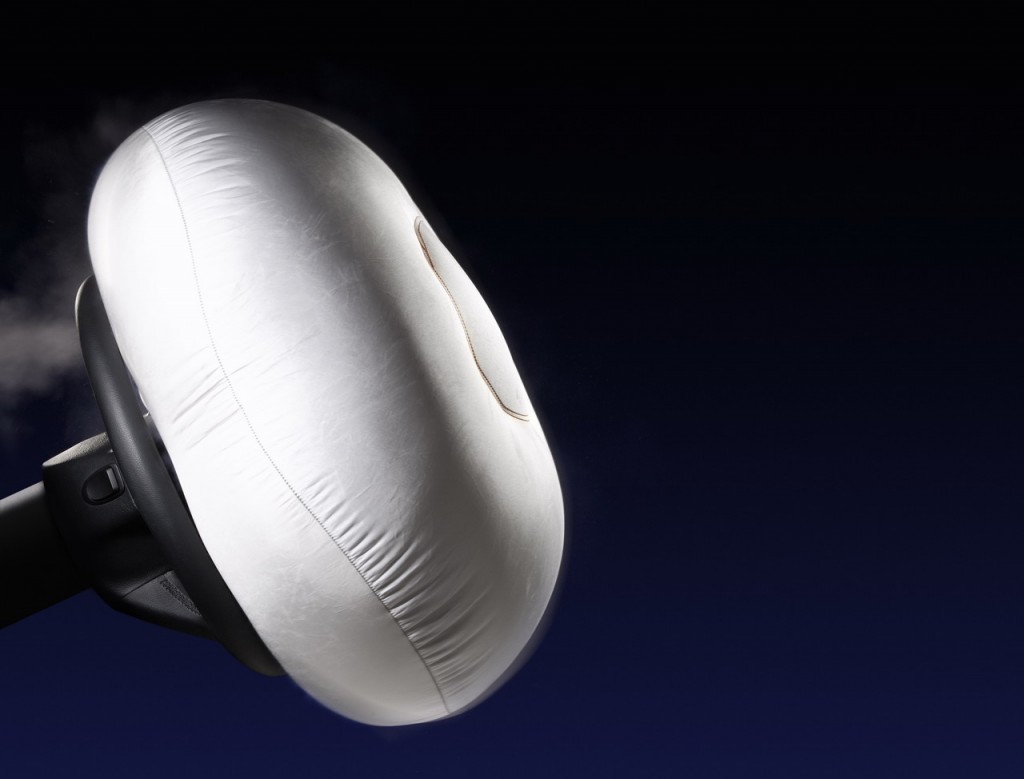
- Deployment force and speed: Airbags fill with gas and fully inflate in roughly 1/20th of a second. At deployment speeds between 100 and 220 mph, the airbag can strike your head and face with enough force to cause a concussion, TBI, or facial fractures—even before your brain has time to process what’s happening.
- Sitting too close to the steering wheel: NHTSA recommends that drivers maintain at least 10 inches of distance between their chest and the steering wheel. Many drivers—especially shorter individuals—sit closer than that, which dramatically increases the risk of head and neck injuries because the airbag hasn’t fully expanded before it makes contact.
- Defective or recalled airbags: When an airbag is faulty, it may deploy with excessive force, fail to deploy at all, or rupture and send metal fragments into the vehicle cabin. Defective airbags turn a safety device into a serious hazard, and the manufacturer may be liable for your injuries.
- Chemical and particulate release: The chemicals and fine dust released during inflation can cause burns, eye irritation, and respiratory complications that compound the physical impact of the deployment itself.
In many cases, the head injury isn’t caused by a single factor but by a combination—the force of the crash throws you forward, the airbag strikes your face, and your head then rebounds into the headrest or side window. This type of secondary impact is a common cause of brain injuries that don’t show symptoms until hours or even days after the accident.
Airbag Recalls and Defective Airbags in Nevada
While airbags are heavily regulated by federal safety standards, defects and recalls remain a serious concern. The largest airbag recall in U.S. history involved Takata Corporation, whose inflators used an unstable chemical propellant that could rupture and propel metal shrapnel into vehicle occupants. That recall ultimately affected approximately 67 million vehicles across more than 30 manufacturers.
More recently, in January 2026, NHTSA issued an urgent warning about substandard replacement airbag inflators. These inflators—likely illegally imported—have been linked to 10 crashes resulting in death or serious injury. The defective inflators ruptured during deployment, sending large metal fragments into drivers’ chests, necks, and faces.
If you drive a used vehicle—particularly one with a salvage or rebuilt title—it’s worth verifying that your airbags are genuine manufacturer parts. A defective or counterfeit airbag may not deploy properly in a crash, or it could cause catastrophic injuries when it does. If a recalled or defective airbag caused your head injury, you may have a product liability claim against the manufacturer in addition to any personal injury claim against the at-fault driver.
Who Is Responsible for Your Airbag Head Injury?
Figuring out who’s liable for an airbag head injury can be complicated, especially when the accident itself, the vehicle’s design, and the airbag’s performance all played a role. Here are the parties that may be held accountable:
- The at-fault driver: In most car accidents, the driver who caused the collision bears primary responsibility for your injuries—including injuries caused by airbag deployment. Under Nevada’s modified comparative negligence rule (NRS 41.141), you can still recover compensation even if you were partially at fault, as long as your share of fault was less than 50%.
- The vehicle manufacturer: If the airbag was improperly installed, incorrectly sized for the vehicle, or the system failed to deploy when it should have, the automaker that placed the airbag in the car may be liable under Nevada product liability law.
- The airbag manufacturer: When the airbag itself is defective—whether due to a design flaw, manufacturing error, or the use of unstable chemical propellants—the company that made it can be held responsible. This includes cases involving recalled airbags that were never repaired.
- Third-party repair shops: If your vehicle was in a prior accident and the airbag was replaced with counterfeit or substandard parts, the shop that performed the repair could share liability for your injuries.
It’s common for more than one party to be at fault. Your attorney can investigate the circumstances of your accident—including the vehicle’s maintenance history, any open recalls, and the airbag’s deployment data—to identify every responsible party and include them in your claim.
Keep in mind that Nevada’s statute of limitations gives you 2 years from the date of your injury to file a personal injury lawsuit under NRS 11.190(4)(e). Product liability claims may have different deadlines depending on when the defect was discovered, so consulting with an attorney early protects your options.
Hurt by an Airbag in a Nevada Car Accident? Our Attorneys Can Help
An airbag head injury can turn your life upside down—unexpected medical bills, time away from work, and the confusion of figuring out who’s responsible and what to do next. You shouldn’t have to navigate that process alone.
At Richard Harris Law Firm, we’ve been representing accident victims in Las Vegas and throughout Nevada since 1980. In that time, we’ve recovered billions of dollars for the clients we represent and helped more than 100,000 people get the compensation they deserve. Our attorneys understand the complexities of airbag injury claims—from investigating whether a defective product played a role to holding multiple parties accountable for your injuries.
We handle the insurance companies, the paperwork, and the legal fight so you can focus on your recovery. If you were injured by an airbag deployment in an accident—or by a malfunctioning airbag—call us today for a free consultation where you’ll speak directly with one of our experienced attorneys about your case.
Frequently Asked Questions
Can an Airbag Give You a Concussion or TBI?
Yes. Airbags deploy at speeds between 100 and 220 mph, and the impact can cause concussions, traumatic brain injuries, and other head trauma. The risk increases if you’re sitting too close to the steering wheel or if the airbag is defective. Symptoms like headaches, dizziness, confusion, and memory problems may not appear until hours or days after the accident, so it’s important to seek medical attention immediately.
Can You Sue the Airbag Manufacturer for Your Injuries?
If the airbag was defective—due to a design flaw, manufacturing error, or recalled component—you may be able to file a product liability claim against the airbag manufacturer. You can also potentially sue the vehicle manufacturer if the airbag was improperly installed. An attorney experienced in product liability can investigate your case and determine which parties are liable.
How Long Do I Have to File an Airbag Injury Claim in Nevada?
Nevada’s statute of limitations for personal injury claims is 2 years from the date of your injury under NRS 11.190(4)(e). For product liability claims involving defective airbags, the timeline may vary depending on when you discovered the defect. Consulting with an attorney as soon as possible helps preserve evidence and ensures you don’t miss any filing deadlines.
What Should I Do if I Was Injured by an Airbag in a Car Accident?
Seek medical attention right away—even if you feel fine, some airbag injuries like concussions and internal trauma can have delayed symptoms. Document the scene, take photos of the airbag and any visible injuries, and keep all medical records. Don’t speak with insurance adjusters before consulting a car accident attorney who can protect your rights and help you recover full compensation.