



Rear-Ended by a Semi-Truck: Nevada Truck Accident Lawyer
Key Takeaways
- Semi-truck drivers who rear-end another vehicle are presumed at fault under Nevada’s following-too-closely law (NRS 484B.127), and federal hours-of-service rules add a second layer of liability for the trucking company.
- Fully loaded semi-trucks weigh up to 80,000 pounds; at highway speeds, a rear-end impact can cause traumatic brain injuries, spinal damage, and wrongful-death claims that take years and millions to resolve.
- Nevada’s two-year statute of limitations (NRS 11.190(4)(e)) starts on the crash date, but trucking companies start gathering defense evidence within hours, so contact a truck accident lawyer before talking to their insurer.
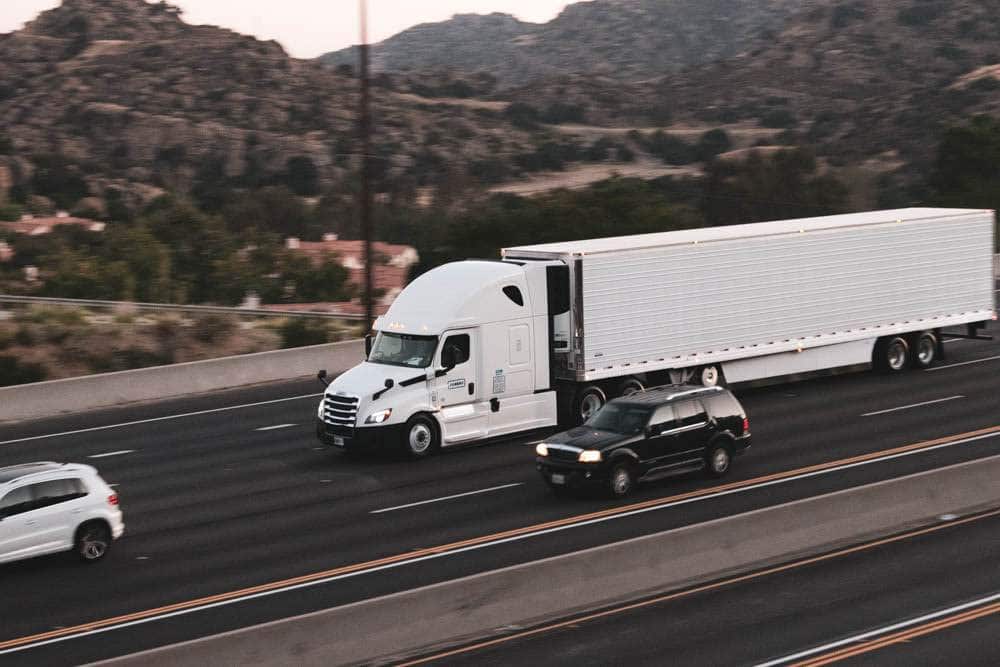
Being rear-ended by a semi-truck in Nevada can be one of the most frightening moments of your life. One second you’re stopped at a light or slowed in traffic; the next, an 80,000-pound rig is in your back seat. Whether it happened on I-15 outside Las Vegas, the Spaghetti Bowl, US-95, or I-80 through Reno, the physics are unforgiving and the legal fight that follows is unlike any car-on-car case.
You don’t have to figure this out alone. Richard Harris Law Firm has handled Nevada truck accident cases since 1980, and our team knows how trucking companies and their insurers move in the first 24 to 72 hours after a crash.
A semi-truck rear-end is not the same case as a passenger-car rear-end.
Is the Semi-Truck Driver at Fault When They Rear-End You?
Yes, in most Nevada cases. Drivers who rear-end another vehicle are presumed at fault under NRS 484B.127 (following too closely), and that presumption is even harder to rebut for commercial truck drivers, who must also follow federal hours-of-service, training, and equipment rules under 49 CFR. The trucking company itself can be held liable through vicarious liability for its driver’s negligence.
Why Rear-End Semi-Truck Cases Are Different
Rear-end crashes between two passenger cars are usually straightforward: the driver in back is at fault, the insurer pays, and the case closes in months. A semi-truck rear-end is rarely that clean.
- Mass and stopping distance: A passenger sedan weighs about 4,000 pounds. An empty tractor and trailer weighs around 35,000 pounds; fully loaded, the federal limit is 80,000 pounds. At highway speed, the Federal Motor Carrier Safety Administration (FMCSA) estimates a loaded semi needs roughly two football fields to stop, compared to about one football field for a passenger car. Injuries are usually catastrophic: traumatic brain injury, spinal cord damage, multiple fractures, or wrongful death.
- Multiple defendants: A truck claim usually has several: the driver, the motor carrier that employs them, the cargo loader or shipper, the truck or parts manufacturer, and sometimes a freight broker. Each carries its own insurance policy, and each will try to push fault onto the others.
- Evidence that disappears fast: Modern semis carry electronic control modules (often called black boxes), electronic logging devices, dash cameras, and satellite tracking data. That evidence can prove fatigue, speeding, or hours-of-service violations, but it can be overwritten in days unless your lawyer sends a preservation letter.
What to Do After Being Rear-Ended by a Semi-Truck
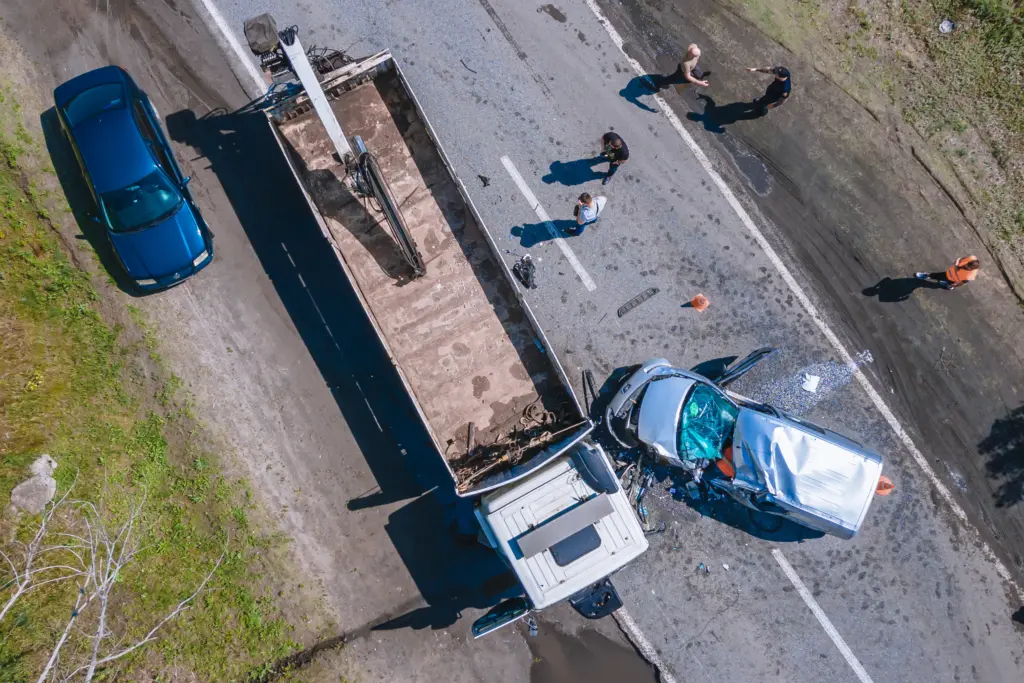
The decisions you make in the first 72 hours can shape the rest of your case. Take the following steps in order, and skip nothing.
- Call 911 and accept medical attention: Police will create an accident report with the truck’s US Department of Transportation (USDOT) number, the driver’s commercial driver’s license (CDL) information, and the carrier’s contact details. Get checked even if you feel fine; adrenaline masks injuries like whiplash and concussions in the first hour, and a same-day medical record links your injuries to the crash.
- Document the truck and the scene: Photograph the entire tractor-trailer (both sides, both ends, license plate, USDOT and Motor Carrier (MC) numbers on the cab door, cargo placards), road conditions, skid marks, debris, and your own vehicle from multiple angles. If the trailer carries a company logo, photograph it; if the cargo is visible, photograph that too. Cargo loading errors can shift partial fault to a third-party loader.
- Get witness contact information: Independent witnesses are powerful in truck cases because the trucking company will treat its driver’s account as the truth and try to bury yours. Names, phone numbers, and a one-line statement gathered at the scene can hold up months later when memories have faded.
- Don’t speak to the trucking company’s insurer: Within 24 to 72 hours, you may get a call from a representative offering a quick check or asking for a recorded statement. Politely decline. Trucking insurers are highly experienced at extracting statements that limit their exposure. Even apologies and small admissions can be replayed against you. Under Nevada’s modified comparative negligence rule (NRS 41.141), anything assigned to your fault reduces your recovery.
- Contact a Nevada truck accident lawyer immediately: A truck attorney sends a spoliation (preservation) letter the same day, demanding the carrier preserve electronic logging device data, electronic control module downloads, dash-cam footage, driver logs, maintenance records, and dispatch communications. Wait a week and that evidence may be gone. Richard Harris Law Firm offers free consultations and works on contingency: no fees unless you win.
Who’s Liable When a Semi-Truck Rear-Ends You?
In a passenger-car rear-end, liability is usually obvious: the driver behind you. In a semi-truck rear-end, you may have valid claims against several parties at once.
- The truck driver: The first defendant. If the driver was tailgating, distracted, fatigued, impaired, or violated the rules of the road under Nevada Revised Statutes (NRS) 484B.127, they bear personal liability.
- The motor carrier (trucking company): Under vicarious liability, an employer is responsible for the negligent acts of an employee performed within the scope of employment. The carrier may also be directly liable for negligent hiring, training, supervision, or pushing drivers to violate federal hours-of-service rules. Nevada truck accident liability often runs deeper than a single defendant.
- The cargo loader or shipper: If improperly loaded or unsecured cargo shifted weight, blocked visibility, or caused the brakes to fail, the loading company can be a defendant.
- The truck or parts manufacturer: A defective brake system, tire, or trailer hitch can shift liability to the manufacturer under a product-liability theory.
- A freight broker or third-party logistics company: Brokers can be held liable for negligent selection of an unsafe carrier under recent federal case law.
Nevada uses modified comparative negligence (NRS 41.141): you can recover damages as long as you were 50 percent or less at fault. If the trucking company tries to put 30 percent of fault on you for slowing suddenly, your recovery is reduced by 30 percent, not eliminated. Identifying every defendant matters because each carries separate insurance, and total available coverage often exceeds the limits of any one policy.
Federal and Nevada Rules Truck Drivers Must Follow
Commercial truck drivers and the companies that employ them operate under both federal regulations from the Federal Motor Carrier Safety Administration (FMCSA) under 49 CFR Part 395, and Nevada traffic law under NRS Chapter 484B. A rear-end crash often involves a violation of one or more of the rules below.
- Hours of service: Property-carrying drivers can drive a maximum of 11 hours within a 14-hour on-duty window, after 10 consecutive hours off duty. They must take a 30-minute break after 8 hours of driving, and total weekly driving is capped at 60 or 70 hours. Electronic logging devices (ELDs) record this data automatically.
- Following too closely: NRS 484B.127 prohibits following another vehicle more closely than is reasonable and prudent. For an 80,000-pound rig, reasonable means a much larger gap than for a sedan. A violation supports a negligence-per-se argument.
- Commercial driver licensing and training: Drivers must hold a valid commercial driver’s license and meet federal training and medical-certification requirements before getting behind the wheel of a tractor-trailer.
- Vehicle maintenance and inspections: Carriers must perform regular brake, tire, and lighting inspections, and drivers must complete daily pre-trip inspections. Skipped maintenance is a common factor in rear-end crashes.
- Drug and alcohol testing: Federal regulations require pre-employment, random, post-accident, and reasonable-suspicion testing for commercial drivers.
- Insurance minimums: Federal regulations require interstate motor carriers to carry between $750,000 and $5 million in liability coverage depending on cargo, far above Nevada’s passenger-car minimums.
Common Causes of Rear-End Semi-Truck Crashes
Rear-end collisions involving big rigs come from a predictable set of causes, most of which trace back to a federal or state rule the driver or carrier was supposed to follow. Driving too fast for conditions is the headline cause. Semi-trucks need significantly more distance to stop than passenger vehicles, and at highway speeds in poor weather even a small overestimate of stopping ability turns into a high-speed rear-end. Tailgating is the related sin. Following another vehicle more closely than reasonable is prohibited by NRS 484B.127, and a semi following a sedan at car-length distance has no margin if traffic slows. Driver fatigue is one of the most common causes of large-truck crashes, which is why FMCSA hours-of-service rules exist, and a driver who pushes past the 11-hour limit, falsifies logs, or splits sleep poorly is dangerous to everyone in front of them.
Distracted driving covers everything that pulls a trucker’s eyes off the road: cell phones, dispatch tablets, GPS units, eating, and reaching for items in the cab. Federal regulations prohibit handheld phone use by commercial drivers, but the dashboard ecosystem has only gotten busier. Mechanical failures fill out the next category. Worn brake pads, low brake-fluid pressure, bald tires, or a malfunctioning trailer brake system can turn a controlled stop into a collision, and the carrier’s maintenance records often tell the story once the crash gets reconstructed. A truck that loses control entirely can also jackknife, which compounds the damage on impact.
Roadway conditions and driver skill close the list. Construction zones and poorly marked roadways set traps even for cautious truckers: sudden lane shifts, abrupt slowdowns, missing signage, and improperly placed cones can make a stretch unreasonably dangerous, and municipalities or contractors that fail to maintain safe work zones can share liability. Inexperienced or undertrained drivers are the human-side equivalent. Federal rules set minimum CDL training standards, but the gap between passing the test and safely handling 80,000 pounds in real traffic is large, and carriers that put new drivers on demanding routes without supervision can be directly negligent.
What’s a Rear-End Semi-Truck Settlement Worth in Nevada?
There is no fixed dollar figure for a rear-end semi-truck case. Past results do not guarantee future outcomes, and every claim turns on its own facts. That said, the value usually rises with the following factors:
- Severity and permanence of injuries: Traumatic brain injury, spinal cord damage, and amputation cases settle for far more than soft-tissue claims because future medical and life-care costs are higher.
- Total medical costs and projected future care: Surgeries, rehabilitation, in-home support, and assistive equipment.
- Lost income and lost earning capacity: Both wages already missed and the long-term impact on your ability to work.
- Number of available defendants and policies: Multi-defendant cases often expose stacked policies that exceed the carrier’s primary coverage.
- Federal and state regulatory violations: Hours-of-service violations, falsified logs, or maintenance failures can support punitive damages under NRS 42.005, which apply when the defendant acted with oppression, fraud, or malice.
Rear-Ended by a Semi-Truck? Our Nevada Truck Lawyers Can Help
Rear-end crashes with semi-trucks are some of the most serious cases on Nevada’s highways. The injuries are catastrophic, the defendants are well-funded and well-prepared, and critical evidence can disappear within days.
Richard Harris Law Firm has fought for injured Nevadans since 1980, and our experienced truck accident attorneys know how to move fast: preserving electronic logging data, identifying every responsible party, and standing between you and the trucking company’s insurance team. Whether you were hit on I-15, the Spaghetti Bowl, in Reno, or anywhere else in the state, we work on contingency: you owe nothing unless we win.
Don’t talk to their insurer first. Talk to us. Call (702) 444-4444 or contact us online for a free, no-obligation consultation, available 24 hours a day, 7 days a week.
Frequently Asked Questions
Is a Semi-Truck Driver Always at Fault for Rear-Ending Me in Nevada?
In Nevada, almost always. Drivers who rear-end another vehicle are presumed at fault under NRS 484B.127 (following too closely), and that presumption is harder to rebut for commercial drivers who must also follow federal hours-of-service and equipment rules. The trucking company can argue you contributed to the crash, but the burden falls on them.
What Should I Do After Being Rear-Ended by a Semi-Truck?
Call 911, accept medical care, and document the entire scene including the truck’s USDOT number on the cab door. Don’t talk to the trucking company’s insurer or give a recorded statement. Contact a Nevada truck accident lawyer the same day so a preservation letter goes out before the carrier can overwrite electronic logging device (ELD) data, dash-cam footage, or driver logs.
How Long Do I Have to Sue After a Semi-Truck Rear-End in Nevada?
You have 2 years from the date of the crash to file a personal injury lawsuit in Nevada under NRS 11.190(4)(e). Wrongful death claims also have a 2-year deadline under the same statute. The window can be even tighter if a government entity is a defendant (such as a NDOT contractor in a work-zone crash), so don’t wait to talk to a lawyer.
Who Can I Sue After a Semi-Truck Rear-Ends Me?
You may have claims against several parties: the truck driver, the motor carrier (trucking company) under vicarious liability, the cargo loader or shipper if improper loading caused the crash, the truck or parts manufacturer for defective equipment, and sometimes the freight broker for negligent selection of an unsafe carrier. Each carries separate insurance, which is why total available coverage often exceeds any one policy.
What Is a Rear-End Semi-Truck Settlement Worth in Nevada?
There is no set figure; results vary based on the facts of each case. Settlement value usually rises with injury severity (traumatic brain injury and spinal cases settle for the most), total medical costs and projected future care, lost income, the number of available defendants, and the presence of federal regulatory violations such as hours-of-service or maintenance failures, which can support punitive damages under NRS 42.005.