



Tanker Truck Accident Lawyer: Hurt in a Tanker Crash in Las Vegas
Key Takeaways
- A tanker crash is not just a bigger car crash. The cargo can catch fire, explode, or spill toxic liquid across the road, so the danger keeps going long after the vehicles stop.
- Tanker trucks tip over easily. Their tall, heavy shape and the liquid sloshing inside make rollovers common, even at legal speeds on an ordinary curve or freeway ramp.
- Trucks hauling fuel and chemicals must carry far larger insurance than a regular big rig. That often means more money is available to cover your injuries.
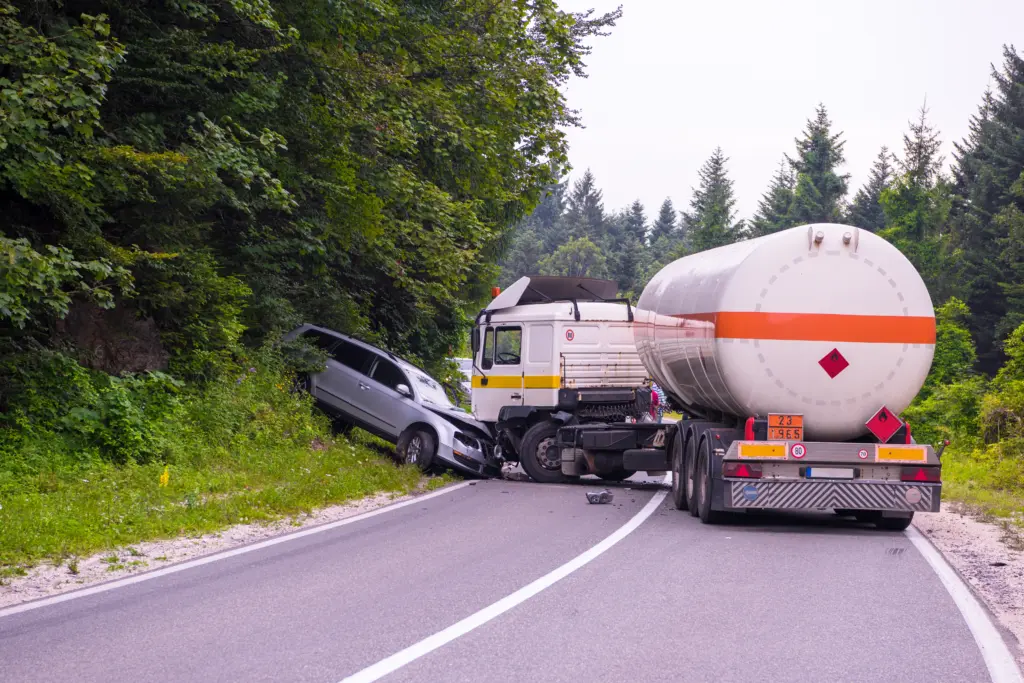
A tanker truck carries thousands of gallons of gasoline, diesel, or industrial chemicals in a single steel or aluminum tank. When one of those trucks crashes, you are not dealing with an ordinary collision. You are dealing with the load.
You are stopped on I-15 behind a fuel tanker, or merging onto the 215 as one drifts into your lane. If it rolls or ruptures, the same cargo that got delivered safely a thousand times becomes fire, an explosion, or a chemical spill in seconds.
Two things make these cases different from a fender bender with a passenger car. The physics of a tank full of moving liquid make tankers prone to rollovers. And because the cargo is dangerous, tanker operators answer to a heavier layer of federal safety rules than most trucks on the road. Both change how your truck accident claim gets built and how much may be available to pay for it.
What Makes a Tanker Truck Accident Different?
A tanker truck accident is more dangerous and more complex than a normal crash because of what the truck is carrying. The liquid cargo can spill, burn, or explode, and it shifts inside the tank, which makes these trucks roll over easily. Tanker operators also face stricter federal safety and insurance rules, so more than one company may share the blame and the cost.
What Is a Tanker Truck?
A tanker truck (also called a fuel truck, tank truck, or gas truck) is a rig built to haul liquids or gas. Some tanks are pressurized, some are insulated, and the metal itself is matched to the cargo. Most are made of aluminum, carbon steel, stainless steel, or fiberglass.
The big highway tankers you see on the interstate typically carry somewhere between 5,500 and 11,600 gallons. A fuel hauler often runs a single tank split into separate compartments, so one truck can drop different grades of gasoline at the same station.
Smaller tank trucks work the neighborhoods and side streets. A vacuum truck pumping out a septic system, a home heating-oil delivery, or an airport fuel truck topping off a jet usually carries up to about 3,000 gallons. Less volume, but the same rule holds: anytime a truck is hauling something that can burn or poison, there is real danger.
The cargo runs a wide range. Gasoline and diesel are the ones people picture, but tankers also move liquefied petroleum, milk, juice, water, molasses, and industrial chemicals.
Why Tanker Trucks Roll Over So Easily
This is the part most drivers never think about until it happens in front of them. A tank full of liquid does not sit still.
When the truck brakes, turns, or swerves, the liquid keeps moving. It surges forward, backward, or side to side inside the tank. That moving weight (sometimes called the wave effect) can shove the whole truck off balance in the middle of a maneuver the driver would have handled fine in a dry-box trailer.
Now add the shape. A loaded tanker sits tall and heavy, with a high center of gravity. High center of gravity plus surging liquid is the exact recipe for a rollover. It can happen on an ordinary freeway ramp, a highway curve outside town, or a sudden lane change, at speeds that are perfectly legal.
Partly full tanks are often the worst. A tank that is only half loaded gives the liquid room to build momentum before it slams into the far wall. Baffles inside the tank help, but they do not cancel the physics.
The Danger After the Crash: Spills, Burns, and Chemical Exposure
With most crashes, the worst is over once the vehicles stop. With a tanker, the crash can be the beginning.
A ruptured tank can pour fuel or chemicals across the pavement and into the air. People who were never in the collision (drivers stuck behind the wreck, nearby residents, or bystanders on the sidewalk) can breathe toxic fumes or come into contact with a hazardous spill. Some chemical exposures cause chemical burns or breathing problems that show up hours or days later, not at the scene.
A fuel spill also brings the risk of fire and explosion. This is why a tanker wreck shuts down a highway for hours and brings out specialized hazmat cleanup crews instead of an ordinary tow truck. If you were exposed to a spill or its fumes, tell paramedics and get checked, even if you feel fine. Documenting that exposure early matters for your health and for any claim.
Common Causes of Tanker Truck Accidents
Hauling fuel and hazardous liquid demands extra caution, and when a company or driver cuts corners, the results are severe. Most tanker crashes trace back to a handful of familiar causes:
- Speeding and hard maneuvers: Taking a ramp or curve too fast is what turns the wave effect into a rollover.
- Driver fatigue: An overworked driver on an unrealistic delivery schedule reacts slower and misjudges the load.
- Overloading or bad loading: Too much weight, or an unevenly loaded tank, makes the truck harder to control.
- Poor maintenance: Worn brakes, bad tires, and skipped inspections leave a heavy truck unable to stop or steer in an emergency.
- Inadequate training: Hauling liquid is a different skill than hauling freight, and undertrained drivers get caught out by the surge.
- Impaired driving: Alcohol or drugs behind the wheel of a loaded fuel tanker is a catastrophe waiting to happen.
Who Is Liable for a Tanker Truck Accident?
Because the cargo is dangerous, tanker operators answer to the Federal Motor Carrier Safety Administration (FMCSA) and a set of hazardous-materials rules that most trucks never touch. Those rules do real work in your case.
Federal law requires drivers who haul hazardous liquid to hold a special license endorsement, placard the truck so responders know what is inside, and follow strict limits on how long they can drive before resting. When a carrier skips those steps, that violation becomes evidence of negligence.
The rules also require far bigger insurance policies for dangerous cargo. A truck hauling bulk hazardous material can be required to carry up to $5 million in coverage, compared with $750,000 for a truck carrying general freight (as of 2026). That larger policy is often why real compensation is available in a tanker case.
More than one party usually shares the blame. Depending on the facts, liability can reach the driver, the trucking company that employed and scheduled them, the company that loaded the tank, a maintenance contractor, or the manufacturer of a failed part. Pinning down every responsible party is exactly the kind of investigation that takes an experienced hand.
Injuries a Tanker Crash Can Cause
Given the weight of these trucks and the fire and chemical risk, tanker crashes cause some of the most serious harm on the road, from traumatic brain injuries and spinal damage to amputations, severe burns, and fatal wrongful death claims. The full range of harm, from whiplash to catastrophic injury, shows up in the common truck accident injuries a commercial crash can cause.
Whatever the injury, the goal of a claim is the same: recover the cost of your medical care, your lost income, and the pain and disruption the crash forced on your life.
Get Ahead of the Tanker Company’s Investigators
The trucking company had people at the scene the day of the crash, already working to shape what happened. A tanker case turns on getting ahead of them: locking down the evidence and naming the right companies before their lawyers close ranks. You deserve that same standard of attention on your side.
Call us this week. Our Las Vegas truck accident attorneys have fought these cases against carriers and their insurers since 1980, we are available 24/7, and there is no fee unless we recover for you. Put your energy into getting well and let us take the fight to the carrier.
Frequently Asked Questions
How Much Does a Tanker Truck Accident Lawyer Cost in Las Vegas?
Nothing upfront. A tanker truck accident lawyer at our firm works on contingency, meaning there is no fee unless we recover money for you. The fee then comes as a percentage of the settlement or verdict, not out of your pocket. The initial consultation is free and carries no obligation.
Can You Sue After a Tanker Truck Spill in Nevada?
Yes. If a tanker spill exposed you to fumes or chemicals, or its fire or explosion injured you, you can pursue a claim even if you were never in the collision. You generally have 2 years from the date of injury to file in Nevada (NRS 11.190(4)(e)). Multiple victims can pursue claims against the same trucking company.
How Soon Should I Hire a Tanker Truck Accident Lawyer?
As soon as you can. The truck’s electronic driving logs, onboard data, and the hazmat cleanup records sit on short retention clocks and can be overwritten within weeks. Getting a tanker truck accident lawyer involved early means those records are preserved before they disappear. Nevada’s 2-year filing deadline (NRS 11.190(4)(e)) is the outer limit, not the goal.
Why Do Tanker Trucks Carry More Insurance Than Other Trucks?
Because their cargo is dangerous. Federal rules require trucks hauling bulk hazardous material to carry up to $5 million in liability coverage, versus $750,000 for a truck with general freight (as of 2026). That larger policy is often why meaningful compensation is available after a fuel or chemical tanker crash.
Who Can Be Held Liable in a Tanker Truck Accident?
Often more than one party. Liability can reach the driver, the trucking company that scheduled them, the crew that loaded the tank, a maintenance contractor, or the maker of a failed part. Federal safety violations, such as an unqualified driver or falsified rest logs, frequently point to the carrier as much as the driver.