



Illegal Lane Change Accident Lawyer: Sideswiped or Cut Off in Nevada?
Key Takeaways
- The driver who changed lanes is usually at fault. The legal duty is on them to make sure the lane was clear before crossing into it.
- Damage location matters more than what anyone tells the adjuster. Where the dents land on each car usually proves who crossed into whose lane.
- Traffic-camera and dashcam footage gets wiped in 7 to 30 days. The longer you wait, the more of your evidence disappears.
You were holding your lane on I-15, the 215 Beltway, or a Henderson surface street when another driver swung into your space without warning. Maybe they never signaled. Maybe they signaled and merged in the same motion.
Either way, your door took the impact, and an adjuster is already running through questions built to pin some of the blame on you. The fight is over which driver violated Nevada’s lane-change rules, what the police report says, and whether anything you did contributed. As a Las Vegas car accident lawyer, we have handled hundreds of these: the sideswipe scrape, the side-impact T-bone, the motorcyclist forced off the road.
Who Is at Fault in a Lane Change Accident in Nevada?
The driver who moved into the other vehicle’s lane is presumed at fault under NRS 484B.223, which requires drivers to stay in a single lane and confirm a lane change can be made safely. That presumption shifts only when evidence shows the other driver was speeding, distracted, or already in the changing driver’s blind spot. Nevada’s modified comparative negligence rule (NRS 41.141) lets you recover as long as you are less than 50% at fault.
What Nevada Law Says About Lane Changes
Two Nevada statutes do most of the work in a lane change case. NRS 484B.223 governs driving on highways with multiple marked lanes: a vehicle must be driven “as nearly as practicable entirely within a single lane” and cannot be moved from that lane until the driver has given the appropriate turn signal and confirmed the lane change can be made safely.
That sentence creates two separate duties:
- signal the move, and
- verify the lane is clear.
A driver who breaks either one has typically broken the statute, and that violation is what your case turns on.
NRS 484B.207 covers overtaking on the left. A passing driver must give a safe distance and cannot return to the right lane until clear of the vehicle just passed; the driver being passed cannot speed up during the maneuver. Most freeway lane change crashes pull both statutes into play.
Violating either is a moving violation and creates a documented finding of traffic-law violations that insurers and juries take seriously when assigning fault. The Las Vegas Municipal Court bail schedule lists four demerit points for this code; some lower-court schedules list three.
How Fault Gets Assigned in an Illegal Lane Change Case
Fault in a lane change crash is rarely 100% one driver. The other driver’s adjuster is already running through the same factors a Nevada jury would, and the percentages land where this list pushes them:
- Turn signal use: Whether the changing driver signaled, how far in advance, and whether the signal was still on at impact. Dashcam footage and witness accounts usually decide this; no signal at all is a near-automatic fault finding.
- Mirror and blind-spot check: Whether the changing driver actually looked. A driver who “didn’t see” the other vehicle has admitted they failed the second duty under NRS 484B.223, even if the signal was on.
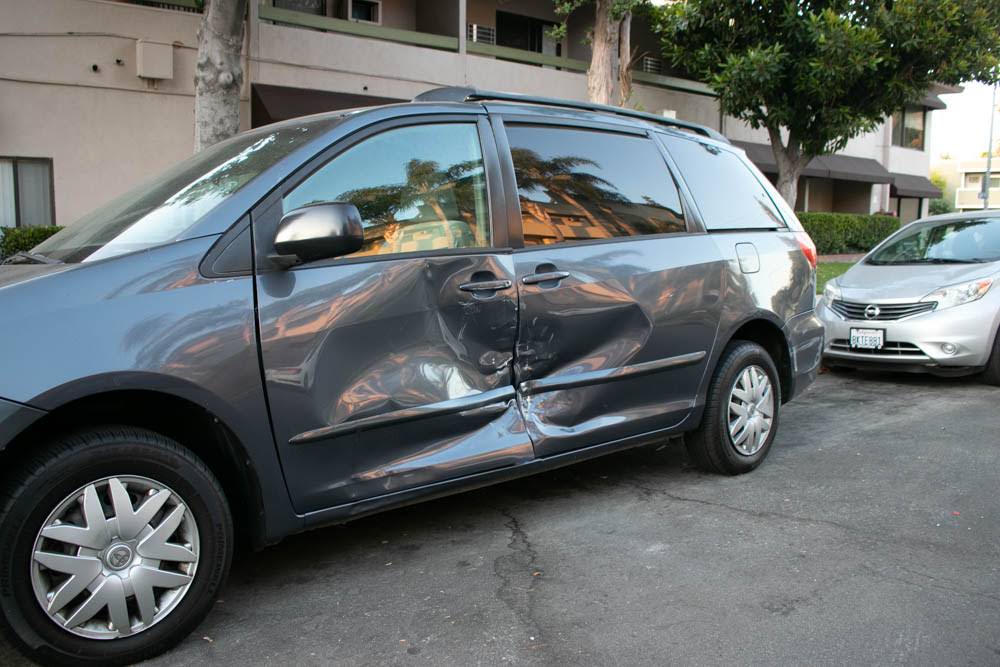
- Position in the lane: Front-quarter damage on the changing car and side damage on yours points to a classic lane intrusion. Rear-quarter damage on the changing car suggests the other driver was accelerating to close the gap. The same physical-damage analysis often controls blind-spot crash fault.
- Speed of the other driver: A driver well over the limit can absorb partial fault for reducing the changing driver’s reaction time. Speeding doesn’t erase the lane-change violation, but it shifts the percentages.
- Blind spot occupation: A vehicle traveling next to the changing car for a sustained period in a known blind spot (a common pattern with commercial trucks and one motorcycle riders are trained to avoid in any motorcycle setting) can shift fault back.
- Police report angle: The investigating officer’s narrative carries weight. A clear citation against the changing driver is gold; a “no fault assigned” report forces you to build the case from physical evidence and witnesses.
- Distraction or impairment: Phone records, surveillance video, and behavior at the scene all factor in. Texting while changing lanes is the modern unsafe lane change.
Nevada’s modified comparative negligence rule (NRS 41.141) is what these factors feed into. Stay below 50% and you recover, reduced by your percentage: a 20% finding on a $100,000 claim still pays $80,000; a 51% finding pays nothing. That is where the fight happens.
Common Crash Patterns We See
The impact pattern matters because it tells the story to the adjuster and, eventually, a jury. Six show up over and over on Nevada lane-change files, and each one comes with its own injury profile and its own evidence problem.
Sideswipe
The classic illegal lane change crash. One side scrapes the other, peeling off mirrors and door handles. The damage usually looks minor in the parking-lot photos and routinely hides bent suspension components, frame stress, and the kind of cervical sprain that doesn’t show up until day three. The thing to fight here is the adjuster’s instinct to call it a “minor impact, soft tissue” claim and offer a few thousand dollars before the MRI is even ordered.
Side-Impact T-Bone
When the changing driver crosses at a sharper angle (often two lanes at once, often weaving from the HOV into the off-ramp lane), the impact lands squarely on your door. Side airbags fire, the cabin actually gets pushed in, and pelvis, hip, and rib fractures stack alongside traumatic brain injury.
Run-Off-Road
A driver swings into your lane, you swerve to avoid contact, and your vehicle leaves the road entirely.
Rollovers, guardrail strikes, and collisions with fixed objects produce the worst injuries in this category, and the at-fault driver often keeps going. With no contact between the two vehicles, the case lives or dies on dashcam footage, witness lane-position descriptions, and a careful reconstruction; without those, the insurer will argue the other driver was never there.
Chain-Reaction
A lane change forces one driver into another, then a third. Common in heavy I-15 traffic near the Spaghetti Bowl and along the I-15/US-95 merge approaching downtown. Liability gets split across multiple defendants and multiple insurance policies, which means the negotiation is really three negotiations stacked on each other and the comparative-fault math gets messy fast.
Motorcycle Pushdown
A car drifts into the next lane without checking for a motorcycle and either makes contact or forces the rider to lay the bike down. Injuries skew severe because there is no door between the rider and the pavement. Helmet evidence, lane-position evidence, and the rider’s right to the full lane under NRS 486.351 all come up here.
Commercial Truck Blind-Spot Crash
A semi or box truck changes lanes without clearing the right-side blind spot. These claims pull federal trucking regulations into the fight on top of state lane-change law.
The defendant list, the discovery scope, and the case value all shift the moment a commercial vehicle is the one changing lanes.
Injuries That Follow Illegal Lane Change Crashes
Lane change impacts hit the body sideways instead of front-to-back, which produces a different injury profile than the rear-ender or the head-on. Severity scales with speed, vehicle size, and whether airbags fire on the impacted side, but a few patterns repeat.
Head, neck, and spine. Traumatic brain injury (TBI) shows up after head strikes against the side window, the door pillar, or the steering wheel; dizziness, memory loss, and persistent headaches sometimes don’t show up for days, which is why a same-day medical visit protects both the diagnosis and the claim.
Whiplash and cervical strain are the signature soft-tissue findings: the neck snaps sideways rather than front-to-back, recovery runs longer, and the imaging is harder to read. Spinal injuries involvement in severe rollover or run-off-road scenarios produces some of the highest-value claims on the docket.
Limbs and skeletal frame. Ribs and clavicles fracture from the side impact itself, wrists fracture from bracing on the wheel, and pelvis or hip fractures land in the higher-speed T-bones. Many require surgical fixation and months of rehab, and the PPD-equivalent impairment rating in a personal-injury context (lost range of motion, hardware in place, ongoing pain) is what carries the case from the medical bill total into real pain-and-suffering numbers.
Internal, soft-tissue, and external. Lacerated organs, internal bleeding, and damage to the lungs or kidneys from force pushing through the body wall can stay silent for hours and turn life-threatening before symptoms show; this is why ER staff scan more aggressively after a side-impact than after a fender-bender.
Broken side glass produces deep cuts on the arms, neck, and face, and airbag burns on the side of the face and chest are common after lateral deployment. Photograph these as they heal. Scar testimony anchors the pain-and-suffering portion of the claim in a way the medical record alone cannot.

Evidence That Wins Illegal Lane Change Claims
Lane change cases live and die on what you can prove in the first 30 days, and the proof comes from a short list of sources that back each other up when they line up:
- The police report: The single most valuable document. LVMPD and Nevada Highway Patrol officers document lane position, debris field, damage location, and statements. A citation under NRS 484B.223 often settles liability before negotiations start. When no report exists, filing without a police report under Nevada’s SR-1 rule shifts the evidence work to you.
- Photographs of damage and scene: The location of dents and scrapes reveals impact direction. Skid marks and debris fields show pre-crash positions. Get these before vehicles are towed.
- Dashcam and surveillance footage: Often the deciding piece. Business security and traffic cameras routinely capture freeway lane changes, but footage at most Las Vegas intersections overwrites in 7 to 30 days, so preservation letters go out fast.
- Witness statements: A lane change happens in seconds, and view angle determines what someone saw. Collect every name and number at the scene.
- Cell phone records: Distraction at the moment of impact can be proven through subpoenaed phone records once a case heads to litigation.
What to Do in the Days After the Crash
The first 72 hours shape everything that follows. In rough order of urgency:
- Get a medical evaluation, even if you feel fine. Side-impact injuries often show up 24 to 72 hours later as the swelling sets in. A documented same-day or next-day visit links the symptoms to the crash.
- Report the crash and request the police report number. If officers responded, the report takes 5 to 10 business days to become available. If they did not respond, file Nevada DMV Form SR-1 within 10 days for any injury or property damage over $750.
- Photograph everything before vehicles are repaired. Both vehicles, the scene if you can return, your injuries as they develop, and any debris on the road. Visual evidence beats verbal description.
- Stop talking to the other driver’s insurer. You aren’t required to give them a recorded statement, and casual answers get used to pin a comparative fault percentage on you.
- Track every expense and every missed work hour. Medical bills, mileage, lost wages, and out-of-pocket costs all factor into the claim. A spreadsheet from day one is worth thousands at the settlement table.
Hit by a Driver Who Changed Lanes Illegally? Here’s How We Start
Lane change crashes turn on percentage points of comparative fault, and the difference between 30% and 51% is the difference between a real recovery and nothing. The fight is the same in every file: identify the evidence early, lock down witnesses, secure the intersection-camera and dashcam footage before it gets overwritten, and push the percentages where the physical evidence says they belong.
Our team works on contingency: no fee unless we win your case. Nevada’s 2-year deadline to sue (NRS 11.190(4)(e)) runs from the date of your crash, and the longer you wait, the harder it gets to lock down witnesses, footage, and the other driver’s story.
Frequently Asked Questions
What Counts as an Illegal Lane Change in Nevada?
An illegal lane change in Nevada is one that violates NRS 484B.223, which requires drivers to signal before changing lanes and to confirm the lane change can be made safely. Common violations include changing lanes without signaling, crossing multiple lanes at once, changing lanes inside an intersection, and merging without checking the blind spot.
Who Is at Fault When Two Drivers Change Lanes at the Same Time?
Fault typically splits between both drivers under Nevada’s modified comparative negligence rule (NRS 41.141), with the exact percentage depending on which driver signaled, who entered the shared space first, and the angle of impact. As long as your share of fault stays below 50%, you can still recover damages, reduced by your percentage.
Does the Other Driver Get a Ticket for an Illegal Lane Change?
Often yes, if a police officer responded to the scene. Violating NRS 484B.223 is a moving violation that typically carries a fine of approximately $300 plus court costs in the Las Vegas Municipal Court and adds demerit points to the driver’s DMV record (the Las Vegas Municipal Court bail schedule lists four points for this code; some lower-court schedules list three). The citation also becomes powerful evidence of fault in your civil injury claim.
What if There Is No Police Report for My Lane Change Crash?
You can still file a claim, but Nevada requires you to submit DMV Form SR-1 within 10 days for any crash involving injury or property damage above $750. Without a police report, evidence value shifts to photos, dashcam footage, witness statements, and damage-pattern analysis to establish the illegal lane change.
How Long Do I Have to Sue After a Lane Change Accident in Nevada?
You have 2 years from the date of the crash to file a personal injury lawsuit in Nevada under NRS 11.190(4)(e). The deadline (statute of limitations) applies whether the case settles or goes to trial. Property-damage-only claims get 3 years (NRS 11.190(3)(c)). Missing the deadline ends the case regardless of how clear the other driver’s fault is.
What if I Was Partly at Fault for the Lane Change Crash?
You can still recover under Nevada’s modified comparative negligence rule (NRS 41.141) as long as your share of fault is less than 50%. Your award is reduced by your percentage: a 20% finding against you on a $100,000 claim pays $80,000. At 50% or more, recovery is barred entirely, which is exactly why these percentages are worth fighting over.